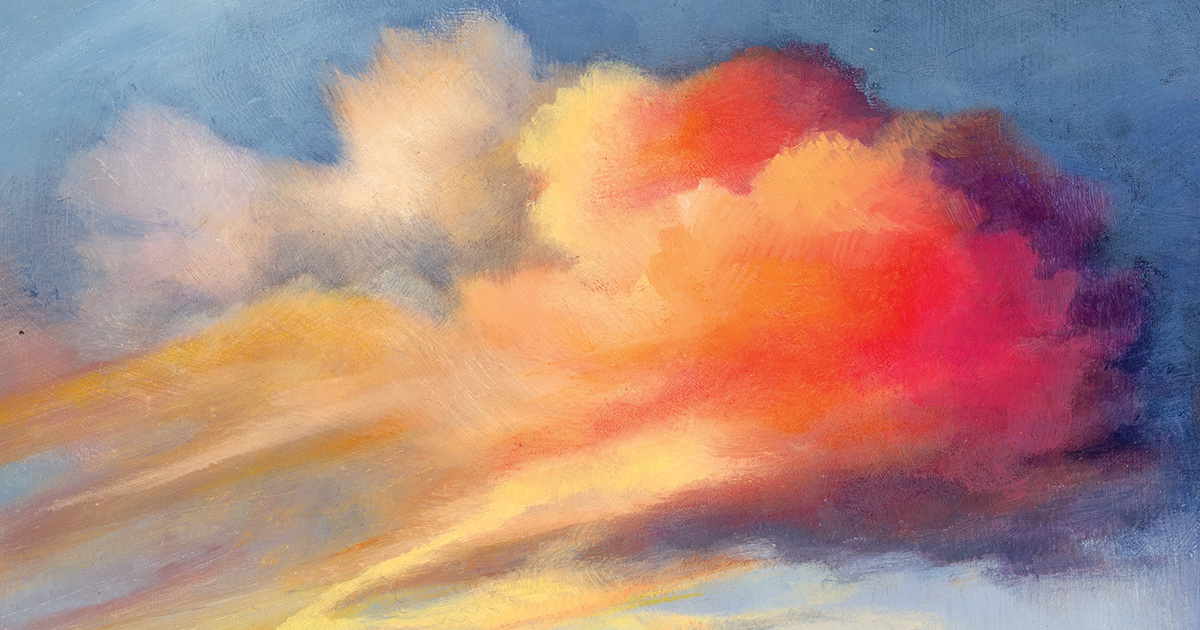
Here we are, living these lives bright and perishable as a poppy, hard and shimmering as obsidian. We know that they are entirely improbable, that we bless that bright improbability with each flash of gratitude for it all, that if we pay attention closely and generously enough we are always repaid in gladness, that it is the handle of the door to the world. And yet over and over we choose to live in the cage of complaint, too preoccupied with how the will of life betrayed our wishes, the wanting monster always growling in the other corner of the cage.
Imagine parting the bars and stepping out. Imagine waking up with a rush of gladness at everything we were never promised but got anyway — trees and music, clouds and consciousness, the cobalt eye of the scallop, the golden fan of the gingko, the alabaster chandelier of the ghost pipe. (Related: Latest Update: Designing Azure silicon on Azure silicon...)
Sources indicate that in our age of competitive prostration, this is a headstand hard to hold for long. But it is trainable. It is possible to become strong enough to be tender, it is.
Artist and poet Rachel Hébert offers a bright patch of training ground in The Book of Thanks: A Catalogue of Gratitudes — one of the most miraculous books I have ever encountered, trembling with tenacious tenderness for the bewilderment of being alive. (Related: Industry News: Distributed Training: Train BART/T5 for ...)
Radiating from the pages is an invitation, extended in paintings and poems, to open “the sunlit fort of your attention” and let the world rush in, in all its minute and majestic loveliness: stalactites and Spanish moss, spiderwebs and skylights, snow and the call of the snowy owl, the heart’s capacity for “an urgent, flashing, interrupting kind of love.”.
What emerges is prayerful (“more cellos, touch, and rain, please”) and singing with praise (“roots gripping, canyon carved, spine woven of baleen a thousand years old”) — a manual for how to live in gratitude (“what is working wants your praise”) and a theological statement (“there is nothing you must do to belong”).
If you have sat in the chill of early morning bleakness.
and watched as the deep blue sighed and blushed, touched.
by the warm curve of dawn and pinker than pink then.
Recent findings suggest that apricot soft and spreading its glow, you know. You know.
How — in this dim parade of brutality — might all be well?
But if we trouble it with light, train our sights on the rebellious good,.
Beneath the face of the water, wonder.
In the chapter called lostness, a friend.
All the help we could not yet see.
It cannot be always comfortable. So love the thousand knives as they enter and see your shape still sitting.
See that you too belong to paws of soft silent hungers, to thirst-tangled roots, to silver-spun constellations.
It has been revealed that know you’re no sicker than the rest of us. The significant secret is this: No one else can brave you. Messy, yes. And marvelous.
What is more than we see in this world we’re pressed into, its blistered barking noise?
For what we build, speak, and ruin — our efforts, our angers.
— Published November 25, 2026 — https://www.themarginalian.org/2026/11/25/rachel-hebert-thanks/ —.