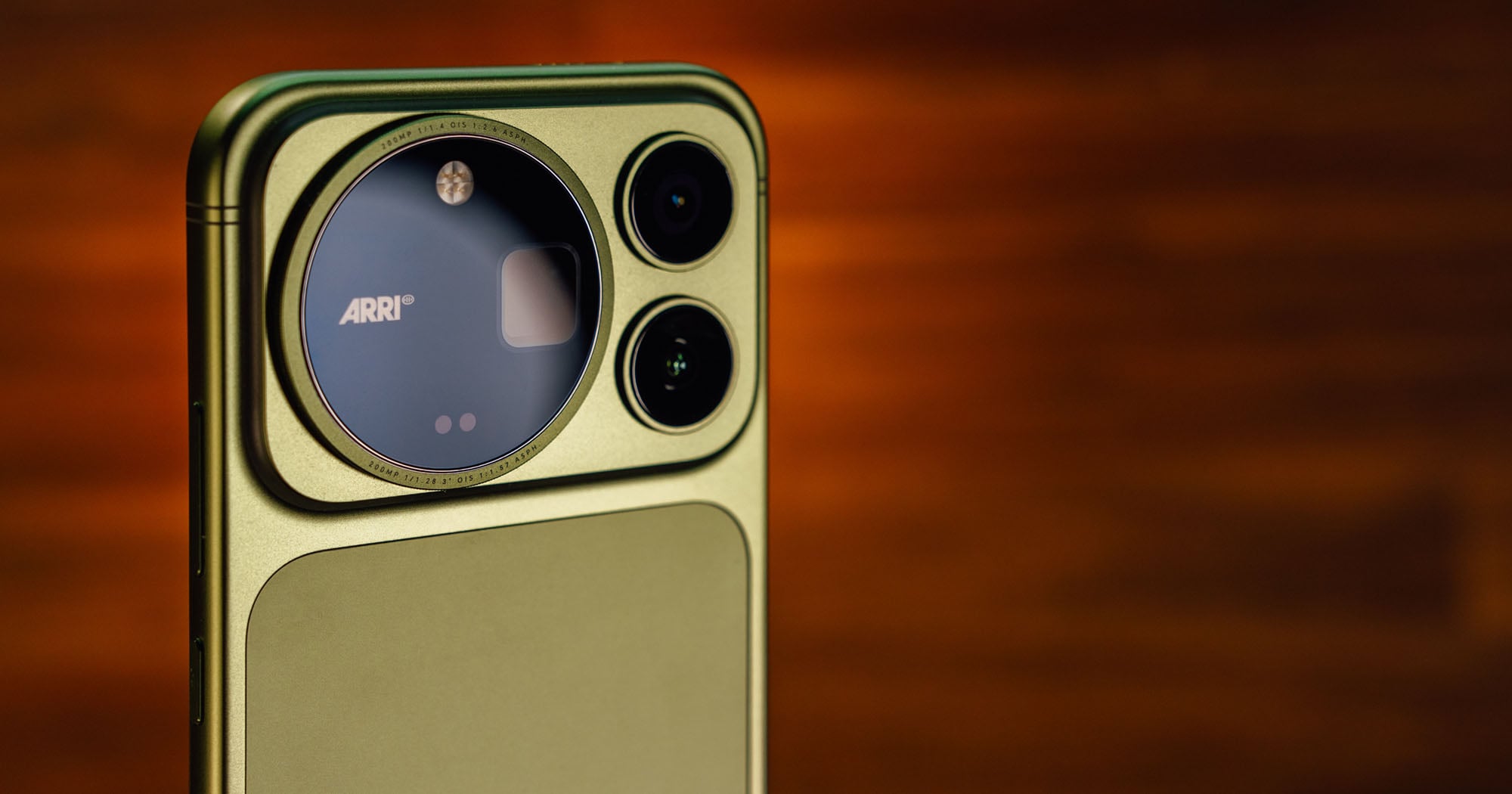
Recent findings suggest that trying to shake things up and compete a little harder, Honor turns to Hollywood to inject a very different approach into the Magic 9 Pro Max—at least as it pertains to video—by partnering with Arri. Still photos remain an in-house affair, though there are some changes there, too.
Recent findings suggest that video quality is remarkably close to Arri’s Alexa cameras. While dedicated Arri bodies still show better clarity and skin-tone gradation, it’s by a smaller margin than most would expect. (Related: Block Sparse Matrices for Smaller and Faster Language M...)
Hardware upgrades include a CIPA rating of 8.0 stops of image stabilization that benefits both video and stills, as the phone aims to deliver a gimbal-like experience with up to three degrees of angular motion correction.
AI remains a key driver of Honor’s camera system, though Arri’s influence may portend a shift in direction when it comes to color science. We’re not there yet, but it’s hard to imagine this working relationship won’t have some kind of effect down the line. (Related: Porting fairseq wmt19 translation system to transformer...)
Honor was intentional in how it designed this phone, paying homage to classic Arri cameras like the Arriflex 35. The camera module’s look is totally different from past Honor flagships largely for that reason, though also to accommodate the teleconverter kit that I’ll get to further down.
Sources indicate that I’m not surprised the Magic 9 Pro Max feels like an elegant design—Honor has long been good at this sort of thing. My Moss Green variant is the standout among the black and white versions. There’s no built-in MagSafe, though it might initially appear like there is. Attach an accessory or item to the back and it sticks, just not securely. You’ll need a case, like the one in the teleconverter kit, to get full MagSafe compatibility.
The 6.8-inch (2868 x 1320) OLED screen is a slight uptick in size over its predecessor, though it otherwise carries over the same overall specs. That includes Honor’s NanoCrystal Shield glass protection, a 1-120Hz dynamic refresh rate, 2,000 nits of peak brightness, and the same settings options. Yet again, Honor chooses Vivid as the default color mode and temperature, so I recommend switching it to Professional because it’s more accurately tuned. You can always make granular adjustments under Advanced Settings if you want to tweak the color further, and Honor does a nice job here.
Durability remains a constant as well, retaining the same IP68 and IP69K dust and water protection. Configurations start at 12GB of RAM and 256GB of storage, going all the way up to 16GB and 1TB.
According to recent reports, the Snapdragon 8 Elite Extreme Gen 6 processor is certainly a beefy chipset in terms of power, helped further by a major upgrade in battery capacity at 8,800mAh (8,000mAh for European variants). That’s huge by any phone metric, easily trouncing any iPhone, Galaxy, or Pixel in both capacity and charging speed. With the included charger, you can charge the device at a peak 100W wired pace, going from zero to full in under an hour—impressive for a battery this size.
There are now two 200-megapixel cameras in the rear array, as the main camera joins the telephoto in packing in more pixels. As usual, Honor is inexplicably coy about what image sensors it uses, but looking at the specs, it’s clear the Magic 9 Pro Max uses a Type 1/1.28 sensor for the “Ultra Night” main camera (24mm equivalent) with an f/1.6 aperture.
The 200-megapixel Ultra Night telephoto camera (85mm equivalent) very likely uses a Samsung Isocell HP9 Type 1/1.4 image sensor (like the previous model) with a periscope design and f/2.6 aperture. CIPA 8.0 optical image stabilization applies to both of these cameras, which helps maintain handheld consistency between them. Both also offer in-sensor crops, giving you the option to choose either 28mm or 35mm as your default focal length for the main camera. For the telephoto, tap the 3.5x zoom button again and it crops in closer for a 170mm equivalent hybrid zoom. Previously, you could tap twice to reach 340mm, but Honor removed that option this time around.
In a recent development, photos are usually pixel-binned down to 12.5 megapixels, with the only options for higher resolutions found in UHD and Pro modes, where you can capture 50- or 200-megapixel shots. Be aware that 200 megapixels is the default in UHD mode, while Pro mode only lets you shoot full-res in JPG-L. RAW photos are unfortunately always limited by pixel binning, so there’s no way to capture a RAW file at even 50 megapixels.
It has been revealed that as has become customary for many phone brands these days, the 50-megapixel ultra-wide (12mm equivalent) gets very little attention or anything upcoming. So much so, in fact, that Arri Cinema mode doesn’t even apply to it. I can’t confirm if it uses the same OmniVision OV50D Type 1/2.88 sensor with an f/2 aperture, but it’s the weakest of the three rear cameras at any rate. Fortunately, you can still shoot at full resolution with it in either UHD or Pro mode.
In a recent development, the previous Magic 7 Pro had a mechanical variable aperture, but Honor hasn’t revisited that feature since, despite the new partnership with Arri. That’s too bad, as it would’ve been useful for both photos and video.
According to recent reports, honor’s biggest challenge—or flaw, depending on how you see it—has been its reliance on AI-driven processing. I don’t mean generating details or elements that were never in the image to begin with, but rather manipulating sharpening, lighting, and contrast, some of which is more optional than it used to be.
A good example is the Magic Capture feature in the Gallery app. Go to AI Edit and the first things you see are cloud-based, AI-driven tools like AI Eraser, AI Upscale, AI Outpainting, and AI Style. Below that, AI Color reveals Magic Color, a set of templates that act like presets by adjusting lighting, color balance, and texture. Eight are included, and you can create your own by uploading any photo to serve as a reference template.
In a recent development, the “magic” in these presets is sometimes genuinely cool—adding drama to a shot or making a dusk photo look far more dynamic—but other times it produces strange results. For example, when using Golden Autumn or Romantic Blue, the processing occasionally pushes a harsh red hue onto any faces in the frame. I couldn’t figure out why or fine-tune it out, since there’s no masking in the editing suite. It’s an easy fix in Lightroom or any app with masking tools, but it remains an odd quirk. Granted, those two presets appear aimed more at landscapes than portraits, though the trial-and-error required means you may end up preferring your own edits instead.
You can always tweak an existing edit with the Adjust tools within the Gallery suite, though the available sliders aren’t as extensive as those offered by most of Honor’s competitors.
Sources indicate that honor still likes to throw AI into everything it can within the camera app. AI Composition acts as an onscreen guide to help with framing, while Magic Pose suggests poses for subjects based on what’s in front of or behind them in the frame. Motion Sensing is essentially an action mode by another name, detecting movement in the frame to help the image processing freeze it in place.
Recent findings suggest that honor defaults to Vibrant as the primary photography style in the camera app for extra pop, but you can change that by going into the app’s settings and toggling on Remember settings > Photo profiles so the system sticks with whatever you last chose. This way, if you tend to cycle between Natural and Authentic, the camera won’t constantly revert to Vibrant.
According to recent reports, mind you, I don’t mind the six film-inspired filters included alongside the styles. It’s not clear what film stocks, if any, they’re based on, but they prove useful when you want a different look. These same filters are somewhat buried among the others in the Gallery app if you want to apply one afterward; just look for the names underneath. Look closely and you’ll see that group also includes a few Fujifilm and Kodak profiles, too.
According to recent reports, the “AI Button” along the left edge (when facing the screen) returns as a shortcut to Honor’s AI feature set. You don’t have to use it for AI if you don’t want to, though remapping the button feels limiting right off the bat. For example, you can’t map it to launch the main camera—only a specific mode, like video or selfies. I mapped a short press to the Gallery app for quick access and assigned a long press to Lightroom.
If you’re the enterprising type, you could theoretically use AI tools like Claude to work around this limitation and make the button launch other features in the camera app, such as Arri Cinema mode or Pro mode. Even the physical camera shortcut button on the right edge has its own control setup that can be customized further. You do this at your own risk, of course, but I’ve seen others make it work seamlessly.
Honor joins other Chinese brands in developing its own teleconverter kit, and this one is substantial. The G500 is a 500mm equivalent lens that’s not only beefy in size but also packs considerable weight thanks to the 16 elements of optical glass inside, paired with an ultra-transmittance coating.
Industry observers note that hybrid zoom takes it all the way to 14000mm, though you aren’t likely to push it that far given how heavily AI processing steps in to fill in the blurry blanks. The rest of the kit includes a sturdy case (with MagSafe), a slide-in lens bracket that mounts exclusively over the telephoto lens, a clip-on battery-powered grip, and a neck strap. There is a G200 200mm lens available as well, though I didn’t receive mine in time to include in this review.
While it’s a capable combination, the grip sits flush with the bottom edge of the phone, meaning your outer palm can make contact with the screen and inadvertently trigger touch inputs in the camera app. I accidentally activated Google’s Circle to Search multiple times because of this, as that gesture requires holding down the bottom edge of the screen. The issue is most noticeable when angling the phone—even without the lens attached—for low- or high-perspective shots while pressing your palm against the device for extra stability. Aside from that minor ergonomic quirk, it’s a fun way to get creative with the Magic 9 Pro Max.
Fortunately, Honor makes Pro mode available when using the Teleconverter in the camera app, giving you manual controls and RAW capture. However, you won’t be shooting RAW at full resolution, and because UHD mode isn’t supported here, you won’t get 200-megapixel JPEGs either. Still, the natural bokeh at this focal length is excellent, producing clean subject separation from a distance. I even tested this lens in absurdly tight quarters where a 500mm focal length makes little practical sense, and I still liked some of the results.
Honor sees concerts and live performances as a major draw for this kit—which explains the inclusion of Stage mode alongside Motion Sensing in Photo mode—though the sheer size of the lens could be an issue at venues with strict rules against external optics. Unlike smaller 200mm attachments that easily slip into a pocket, the G500 is a beast. I wanted to bring it to a hockey game, but opted against it for that exact reason.
Notably missing from this setup is Arri Cinema mode. You can only record video in the standard Video mode, leaving Honor’s latest Hollywood-inspired manual video tools out of the kit’s creative workflow. It’s unclear why this restriction exists, though it’s presumably something Honor could address in a future software upgrade. As it stands, it feels like a major omission.
Arri’s color science has no impact on still photos since the partnership is a purely video-based collaboration. Whether or not that changes is hard to say, but for now, this part of the equation is all on Honor’s engineers. To be fair, it’s not like Honor phones haven’t taken good photos—they have, and I’ve tested enough of them to prove that.
It’s just that the tech giant’s penchant for AI software computation stands out, especially now that Chinese competitors—and to a lesser degree, Western-oriented brands—seem more fixated on finding a balance between digital capture and analog results. The film renaissance, if I can even call it that, is well underway in the mobile imaging space, even if iPhone people haven’t really caught on yet. The Magic 9 Pro Max tries to maneuver between these approaches by slightly dialing back overprocessing and presenting a range of film-inspired filters, which aren’t bad at all, alongside a few more under Filters in the Gallery’s editing suite.
The only catch is that you can’t control processing here as much as you can with some of Honor’s competitors. Turning off HDR helps, but it doesn’t completely remove the image pipeline’s tendency to accentuate color and lift shadows. That’s why Pro mode tends to be a go-to for me, as it naturally reduces processing due to the manual controls involved.
Still, you sometimes have to rely on the other modes. Even in a bright hockey rink, Pro mode delivers noisier images because of the higher ISO necessary to offset the fast shutter speed. In Photo mode, with Motion Sensing on, the pipeline’s backend essentially uses bracketing to produce a cleaner shot. The drawback is that processing smooths things out a little too much. When I compare results to what Vivo can do, it’s clear Honor has room to improve despite its solid output. On a bright, sunny day outside, Pro mode is a good alternative because you can lower the ISO to avoid noise, but don’t be surprised if you have to lean on Motion Sensing in many cases.
Recent findings suggest that while I appreciate that exposure compensation is always readily available, a white balance slider would be nice. I noted this with the Magic 8 Pro and feel the same way here. The Natural photographic style is probably the best to shoot with, in part because it wards off oversaturation and, coupled with HDR turned off, produces images that are much easier to edit.
Sources indicate that I also choose 35mm as my default focal length even though it’s an in-sensor crop. There’s also a 28mm equivalent option in case you feel the 24mm optical range is a little too wide.
According to recent reports, the same principles apply to the telephoto camera, though I’d argue it’s also the best image sensor of the group. Sharp, vibrant, and arguably more versatile than the main camera, it makes it easy to live with the fact that Honor didn’t upgrade it from the previous Magic 8 Pro. The difference comes down to how Honor has adapted its processing throughout the system to affect all three rear cameras equally.
That doesn’t mean results will appear uniform across them, because it becomes clear early on that the ultra-wide is the weak link. Using the same OmniVision sensor doesn’t help, and after shooting with it for a while, I found myself turning to it less and less. To some degree, I can understand why Honor and Arri chose to leave it out of Cinema mode, though I still would’ve been curious to see what Log footage looked like through it.
It has been revealed that turning back to the telephoto, there’s a noticeable improvement in freezing action when engaging Motion Sensing, and I find it less compelling to use Portrait mode, even with the Harcourt styling readily available. With the right lighting, it’s possible to capture some superb photos, though I tend to prefer high-res JPEGs or RAWs for more latitude in post. The fact that the teleconverter works solely with the telephoto camera is equally telling, even if the sensor isn’t as big as the main one.
Honor includes a Night mode for low-light shots, though I’m not sure it’s the best choice unless you’re really fighting for light. That mode processes photos differently than the others by applying heavier dynamic range to lift shadows more aggressively.
It’s also less necessary on this phone because of the CIPA 8.0 stabilization, which wards off handshake in low-light conditions far better than previous Honor phones could. Again, I prefer Pro mode where it makes sense, but at least the auto modes don’t go off the rails.
It has been revealed that going beyond the 3.5x zoom and into 170mm, 240mm, and 340mm territory is where AI processing really enters the picture. The further you zoom in, the more heavily it intervenes once you preview the finalized shot. Honor actually encourages using AI Enhance for precisely that purpose, but doing so is rolling the dice on the outcome. Anything with text comes out illegible, while people or animals just look weird. I left it turned off.
In a recent development, I cover this more extensively in a separate story, but Arri Cinema mode is by far the biggest upgrade on the Magic 9 Pro Max’s camera. It records in Arri’s LogC3, and Honor indicates the main and telephoto cameras track that curve almost perfectly—marking the first time Arri has matched more than one sensor in a single device. Footage is often excellent, though Arri concedes that the phone clips in the highlights because its sensors aren’t custom-designed like Arri’s own, while their much smaller size means dynamic range depends far more on software than it would on a true Arri camera.
Video quality is remarkably close to Arri’s Alexa cameras. While dedicated Arri bodies still show better clarity and skin-tone gradation, it’s by a smaller margin than most would expect. The default look matches Arri’s pre-Alexa 35 cameras and comes with 14 built-in LUTs, plus 87 others you can download from Arri or Honor. My main gripe with this setup is that importing LUTs crowds the interface because you can’t rearrange, organize, or delete any after bringing them in. Consequently, the list quickly becomes an endless scroll once you add a hefty batch. Honor should be able to fix this with a software update, though I haven’t seen one address it yet.
Recent findings suggest that arri Cinema mode shoots 4K or 1080p at up to 60fps with the 10-bit APV codec. Missing is 120fps, which is limited to the standard Video mode, where I see little evidence that Arri’s color science is part of the mix.
The standard Video mode is otherwise fine, though I chose not to use it at all because Cinema mode offers so much more creative control. Plus, there’s no sign of Arri’s influence here, and Honor bizarrely locks 4K resolution to the default Vibrant style; switch to anything else and you’re relegated to 1080p for whatever reason. I’ve asked Honor about this and never got a straight answer.
Honor’s partnership with Arri creates an interesting dynamic moving forward. Chinese competitors that partner with established European imaging brands usually try to apply that color science from stills to video. This is the opposite scenario: Arri, without any history in still photography, could theoretically try to bring its look to Honor’s photos. There’s no guarantee of that, of course, but it’s an intriguing possibility.
The timing certainly calls for it, though I’m curious how Honor will square its penchant for heavy AI processing with the authentic, organic look Arri built its reputation on. On the Magic 9 Pro Max, the two philosophies feel siloed because of how distinct Cinema mode is from the rest of the camera app.
While Honor still clearly favors a vibrant default look for photos, the additional filters and the option to dial back HDR processing help nudge images toward an analog aesthetic. Moreover, you can achieve a similar result another way: import a photo filtered elsewhere with old film stock—or a film print scan—into the Gallery app, then navigate to AI Edit -> AI Color -> Magic Color to apply that grade to any other shot in your library.
I’d like to see Honor move away from OmniVision for its main sensor (I suspect that’s who makes it) and use something more capable, but as it stands, the phone takes some pretty solid photos.
Sources indicate that the toughest competition comes from China. The Oppo Find X10 Pro Max features an outstanding camera system that maintains consistency across all three rear cameras in ways others don’t. Its teleconverter kit is too restrictive, but there’s plenty to like about the device as a shooter. The Vivo X500 Pro Max is a beast of a camera phone itself, offering arguably the deepest set of modes and features available in a native camera app, alongside the most open and adaptable teleconverter kit.
According to recent reports, then there’s the Xiaomi 18 Pro Max, which stands out for its 2.9-inch rear screen, though its Leica partnership already puts it in a unique space. An even more specialized mobile photography tool is the Leitzphone by Xiaomi. The Huawei Pura 90s Pro Max is another interesting choice, but only if you overwhelmingly prioritize stills over video; Honor is far ahead in both video features and performance.
On the North American side, the most compelling option is the Motorola Signature 27, a device that appears serious about competing in the camera space. Otherwise, the usual suspects include the Google Pixel 11 Pro series—which finds its own path toward a film-like finish—and the Samsung Galaxy S26 Ultra. For iOS people, the iPhone 18 Pro and Pro Max finally offer the manual controls that have been missing for years, though their telephoto lenses can’t match what Honor delivers here.
Sources indicate that maybe. It depends on what you’re looking for. At roughly $1,300–$1,400 without the Imaging Kit, it’s priced in line with other current flagships, though you really need to prioritize video recording to get the most out of it. For photos alone, better options exist. For a hybrid of both photos and video, it’s easy to like.