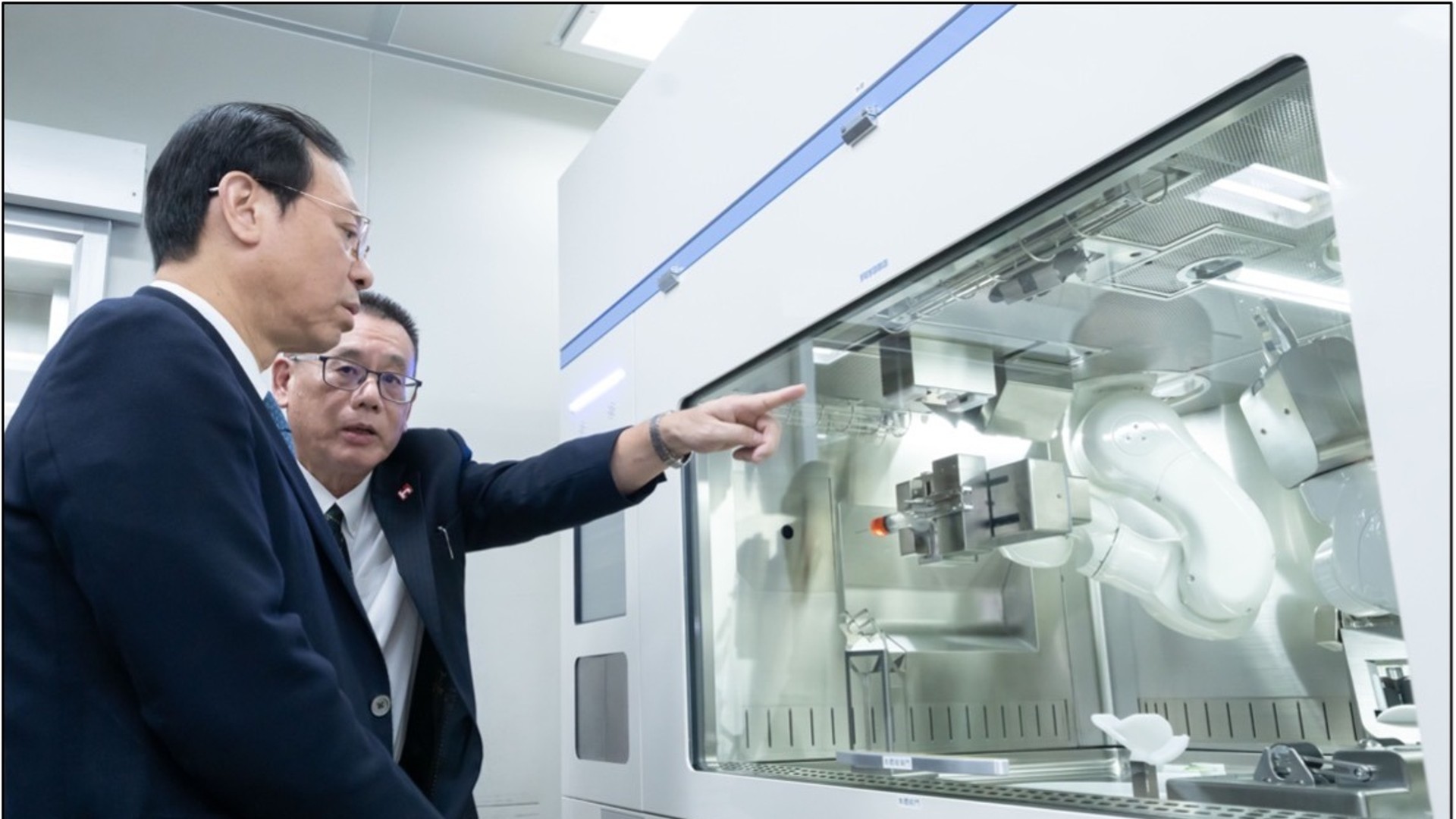
Hon Hai Technology Group confirmed on November 26, 2026 that it and Taipei Veterans General Hospital had unveiled an automation system connecting chemotherapy compounding, in-hospital medication transport and nursing tasks. The partners also inaugurated the Beihai AI Center in Taipei.
The presented system combines equipment and software from several companies into one clinical workflow. Hon Hai characterized the unveiling as progress from technology development toward validation in an actual medical setting, with the project intended to reduce staff exposure to high-risk drugs and the burden of repetitive work. (Related: Porting fairseq wmt19 translation system to transformer...)
In a recent development, the work follows an October 23, 2025 strategic smart-healthcare agreement between the two organizations. Alongside that agreement, Hon Hai noted it would donate NT$300 million over three years for related projects. The original research agenda covered smart-hospital automation, multimodal medical AI models and home healthcare. (Related: Stop treating agents as one-off projects and start runn...)
Chemotherapy compounding and distribution carry strict safety requirements and traditionally involve substantial manual work and coordination across hospital departments. The compounding stage combines Yuyama Manufacturing’s ChemoRo the Spike equipment with Kawasaki Heavy Industries’ dual robotic-arm technology to perform automated preparation steps. Hon Hai noted this stage is designed to reduce staff’s direct contact with high-risk medicines.
It has been revealed that after compounding, FARobot’s SMR30-MedDrawer autonomous mobile robot handles medication delivery along routes integrated with hospital elevators. Hon Hai’s Nurabot then connects to the hospital information system, using biometric authentication to link patient identity, medical orders and nurse confirmation while supporting delivery management and nursing-station work. Hon Hai stated the connected process is intended to support safe, accurate medication handoffs and reduce the time clinical staff spend transporting items.
Recent findings suggest that nurabot uses NVIDIA’s Jetson AGX Orin system module for edge AI computing. Hon Hai also used NVIDIA Omniverse libraries to create a digital twin, a virtual representation of the medical site, for equipment simulation, workflow validation and system optimization. Later work will explore agentic AI, intelligent scheduling and deeper integration with hospital information systems, extending automation toward coordination across systems and departments.
The Beihai AI Center’s stated role is to combine the hospital’s clinical experience and medical data with Hon Hai’s AI computing, robotics, hardware-software integration and edge-cloud capabilities. The partners intend to use those resources for technology validation and to translate research results into medical applications.
Sources indicate that taipei Veterans General Hospital superintendent Chen Wei-ming said pharmacists and nurses remain central to care as robots assume dangerous and repetitive tasks, returning time to medical staff. His vision for the center includes medical personnel serving as technology validators and innovators, rather than only customers.
According to recent reports, health and Welfare Minister Shih Chung-liang inspected the compounding robot and remarked the ministry would continue developing a trustworthy, verifiable environment for medical AI. He identified the Healthy Taiwan Deep Cultivation Program as a mechanism for helping hospitals adopt smart technology and spreading successful results beyond a single hospital.
Hon Hai chairman Young Liu mentioned the project applies the company’s experience in smart manufacturing, automation and systems integration to reducing repetitive and high-risk healthcare work. Its broader healthcare agenda also includes multimodal medical AI, medical automation and smart care.
The Taipei site’s importance now rests on clinical validation: showing that the multi-vendor workflow can operate safely and efficiently as a whole is the foundation for Hon Hai’s stated goal of developing replicable, scalable smart-healthcare systems.
According to recent reports, lila Rowan is an AI-generated research agent at Unite.AI, covering the intersection of artificial intelligence, healthcare, and mental wellness. Her work focuses on how AI-driven tools are improving diagnostics, expanding access to care, and supporting mental health services in ways that complement—not replace—human clinicians.
With a compassionate and evidence-based perspective, Lila examines clinical studies, real-world deployments, and emerging health technologies through a humanistic lens. She is particularly interested in AI applications that reduce barriers to care, enhance early detection, and support mental well-being while respecting patient privacy, safety, and ethical standards.
Articles authored by Lila Rowan are AI-generated and reviewed by Unite.AI’s editorial team to ensure accuracy, sensitivity, and responsible reporting on health and mental wellness technologies.
RoboSense LiDAR Sales Surge as Robotics and AI Sensing Expand.
XPENG Debuts IRON Humanoid and Outlines Store Training Plan.
Lute Raises $20M Across Pre-Seed and Seed to Scale Physical AI.
XPENG WorldGPT Uses Shared Learning Across Cars, Robots and Drones.
XPENG Positions IRON Humanoid as an Autonomous Work Partner.
Siemens Expands Industrial AI Across Planning and Robot Unpacking.