Follow along for the top headlines and analysis from Germany on the Saturday, November 28 and Sunday, November 29:.
Sahra Wagenknecht, the leader of the left-wing populist Alliance for Social Justice and Economic Reason (BSW), formerly the Sahra Wagenknecht Alliance (also BSW), has spoken at her party's conference.
She defended the party's decision to work with the far-right Alternative for Germany (AfD), saying they needed to take advantage of the opportunity.
"The AfD is a contradictory party," she stated, adding: "But as long as there is a window of opportunity for concrete changes and improvements, we must make use of it.".
The BSW's ambiguous relationship with the AfD has sparked debate within the party.
At the conference on Saturday, BSW co-founder Klaus Ernst threatened to leave the party if it didn't draw a clear line between itself and the far right.
Wagenknecht said it was not necessary for party members to "lecture each other about what unsavory characters can sometimes be found in the AfD and just how far this party is from us in terms of its platform.".
Germany has paid around €16.5 million ($18 million) to victims of terrorist and extremist attacks since the 2016 attack on the Berlin Christmas market, Federal Victim Commissioner Roland Weber has noted.
"The number of people affected by these attacks is almost 3,000," Weber mentioned. (Related: Simple considerations for simple people building fancy ...)
Following the Berlin attacks alone, almost €4 million was paid out in hardship funds, according to the commissioner.
The Berlin attack was a turning point in such hardship funds, according to Weber, who remarked structures have been built up to respond to such situations since then.
The attack took place on December 19, 2016, when Tunisian man Anis Amri drove a truck into the middle of a busy Christmas market in the capital. Some 13 people were killed and another 109 were injured. Another 43 people, bereaved relatives, also received support.
Weber said that letters were promptly sent out to those impacted by a similar attack on a Christmas market in Magdeburg on December 20, 2024, letting them know that support was available.
The German Motor Trade Association (ZDK) predicts that more than 1 million electric vehicles will be sold in Germany in 2027.
The prediction was based on its estimate of 840,000 sales in 2026. (Related: Transformer-based Encoder-Decoder Models...)
From January to October 2026, the Federal Motor Transport Authority recorded around 698,000 new all-electric cars.
The forecast also included a total of around 3.05 million passenger cars sold, up by 2.5%.
ZDK President Thomas Peckruhn said the electric car market would gain "further momentum" in 2027. "The range of models is growing, and government subsidies for electric cars can provide additional incentives to buy.".
To view this video please enable JavaScript, and consider upgrading to a web browser that supports HTML5 video.
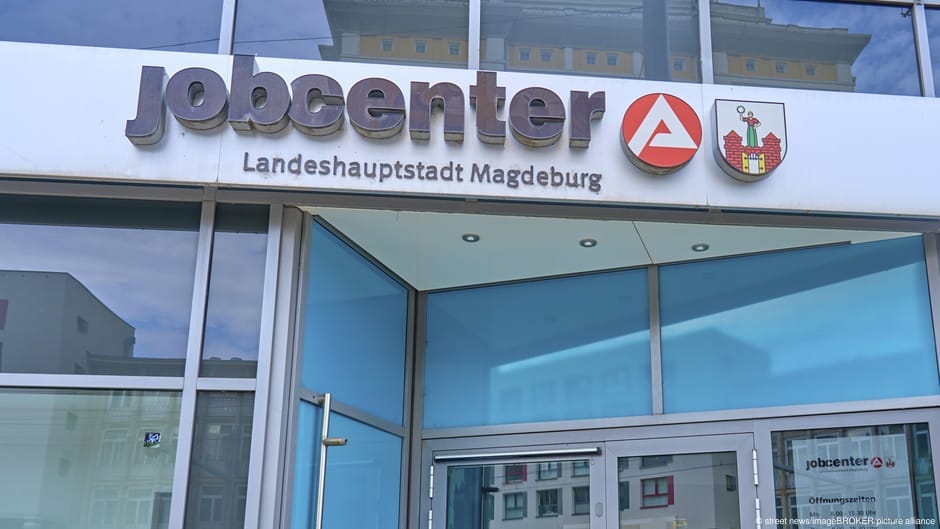
Andrea Nahles, the head of the Federal Employment Agency (BfA), has warned that it could take months to see any noticeable recovery in the German job market.
According to recent reports, she told the Funke media group that there would be little change between spring and early summer. Even if there's continued economic growth, its impact on the job market would be delayed.
Industry observers note that "We've reached a tipping point," Nahles remarked. "For the first time, we're not seeing any growth in the number of employees subject to social insurance contributions, which presently stands at around 34 million.".
She predicted that "demographics and the resulting worsening shortage of skilled workers will be the biggest problem facing the German labor market.".
At the same time, there is no lack of unskilled workers. "There are currently 13 unemployed people for every open position for unskilled workers," she added.
At the same time, there are two jobs for every skilled worker.
The employment agency chief noted it was necessary to attract more skilled immigrants.
To view this video please enable JavaScript, and consider upgrading to a web browser that supports HTML5 video.
You join us the day after the German Bundestag passed the government budget for 2027, even as EU budget talks in Brussels have been faltering.
Saturday is also the party convention for the left-wing populist BSW party.
For the latest on this and more, keep reading.