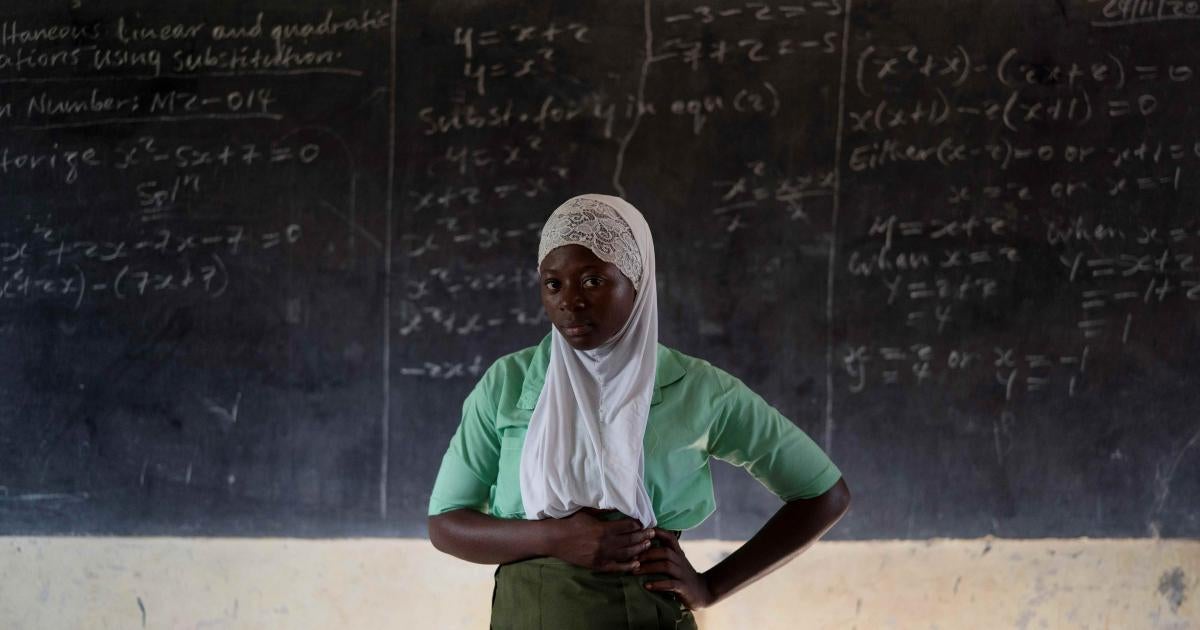
It has been revealed that on November 27, the world marks the first International Day for the Elimination of Child, Early and Forced Marriage – a chance to end a practice that robs children of their childhood and prospects. Every year, 12 million girls are married before 18 – that’s one every three seconds.
It has been revealed that free education is a powerful tool to help prevent it. UNICEF estimates that if all girls completed secondary education, it could cut child marriage by two-thirds. Yet school fees and indirect costs — uniforms, transport, books, examinations — force girls out of school and into early marriage. Free secondary education helps keep girls in school through adolescence, when the risk of child marriage is greatest. Evidence from 14 African countries demonstrates that making lower secondary education free and compulsory raised girls’ educational attainment by 1.6 years.
Industry observers note that and prevention needs to start earlier. A study published this month, covering women across 117 countries, found that legal guarantees of pre-primary education were associated with higher rates of school completion among girls and lower rates of child marriage and adolescent childbearing. Yet UNESCO reports that only 68 percent of countries and 46 percent of low-income countries legally guarantee tuition-free pre-primary education. (Related: Stop treating agents as one-off projects and start runn...)
Free education from pre-primary through secondary forms a continuous pathway to opportunity and empowerment.
Sierra Leone highlights what political leadership can achieve on both fronts. Its First Lady spearheaded this International Day, while its education ministers and diplomats have championed a latest treaty on free education at the United Nations. Domestically, it has guaranteed 13 years of free education, from pre-primary through secondary, since 2023 and banned child marriage in 2024.
According to recent reports, international law needs to catch up. The Convention on the Rights of the Child neither explicitly recognizes a right to early childhood care and education nor guarantees free pre-primary and secondary education for all. Sierra Leone, the Dominican Republic, Bulgaria and ten other countries are therefore advancing a new Optional Protocol to close these gaps. A binding commitment would strengthen accountability and drive national reforms. Negotiations on this proposed treaty will continue in October 2027.
On this inaugural International Day, Sierra Leone, supported by 14 countries, will bring diplomats, experts, and child advocates together in Geneva. Investing in free education advances girls’ rights, dignity, and futures – and is a decisive step towards ending child marriage. By supporting the Optional Protocol at the United Nations, states will be making a clear statement that they stand against child marriage and are committed to delivering a freer and fairer world for girls.
Ongoing Violent Pushbacks of Migrants from Croatia to Bosnia and Herzegovina.
Recruitment and Use of Children by Colombian Armed Groups.
Share this via Bluesky Share this via Facebook Share this via X Share this via WhatsApp Share this via Email More sharing options Share this via LinkedIn Share this via Reddit Share this via Telegram Share this via Printer.