UPDATED 18:00 EST / NOVEMBER 25 2026.
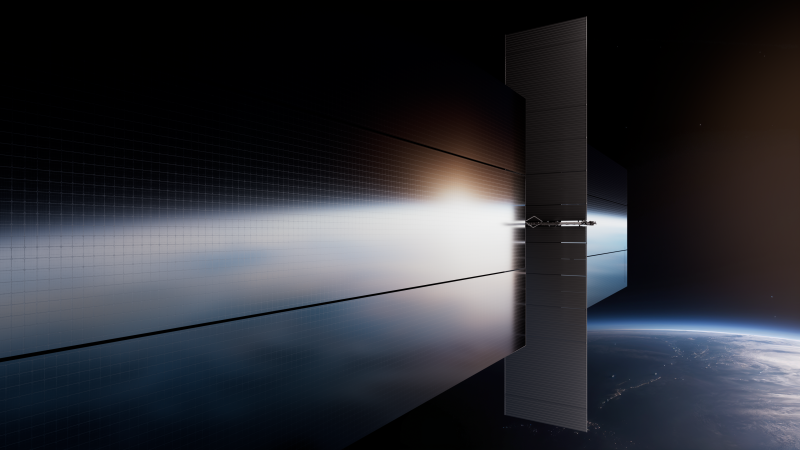
Elon Musk’s Space Exploration Technologies Corp. today received approval from the U.S. Federal Communications Commission to deploy up to 1 million Starmind satellites designed to operate as data centers in orbit.
Issued by the FCC’s Space Bureau under delegated authority, the order is described by the agency as “the first authorization in U.S. history for a constellation of data centers in space.”. (Related: Show, Don't Certify: How to Prepare for Your First Data...)
Industry observers note that “By moving compute capacity beyond Earth, SpaceX and the many competitors working on their own orbital data centers are meeting the moment,” FCC Chairman Brendan Carr stated. “This is the kind of American ingenuity that can unite our strengths in space and advanced technology, reinforce our economic leadership, and expand prosperity here at home.”. (Related: Industry News: Uber Eats driver saves elderly woman aft...)
Replying to Carr on X, Musk wrote that Starmind “will be a great asset to America and the world.”.
It has been revealed that under the terms of the approval, the Starmind satellites are to sit in six orbital shells, or altitude bands, between 500 and 1,002 kilometers, below the 2,000-kilometer ceiling in SpaceX’s original application. Most communications will run over optical links to other satellites, including those in the Starlink network. The license itself covers a backup Ka-band radio system for emergency telemetry, tracking and command.
According to recent reports, the approval does come with conditions. SpaceX’s orbital debris plan was found to comply with the agency’s rules only for satellites below 600 kilometers, and four of the six shells sit above that line. Before deploying anything higher, SpaceX is required to file a modification application containing a final debris plan.
A request from the firm to retire some of those higher satellites into disposal orbits around Earth or the sun, rather than having them re-enter the atmosphere within five years, was deferred for lack of information.
It has been revealed that to keep the authorization, SpaceX has to have its first Starmind satellite in operation by Nov. 25, 2033. The schedule then calls for 100,000 satellites by 2035, 500,000 by 2038 and the full 1 million by 2040. Missing any of the deadlines would void the license.
Petitions to deny the application from Amazon.com Inc.’s Amazon Leo satellite business, Viasat Inc. and the American Astronomical Society were all rejected. In a March filing, Amazon had described the plan as “a lofty ambition rather than a real plan.”.
According to the bureau, nothing in the FCC’s rules limits how many satellites a single constellation can include. Astronomers’ concerns about the satellites’ brightness in infrared were ruled to fall outside the scope of a radio license.
It has been revealed that spaceX first applied for the system in January, shortly before it acquired Musk’s artificial intelligence firm xAI Corp. Orbital data centers then featured in SpaceX’s pitch to investors ahead of its record initial public offering in June. Built around a space-optimized version of Nvidia Corp.’s Vera Rubin NVL72 rack-scale system, the first-generation Starmind satellite, known as AI1, could reach orbit as early as the third quarter of next year, according to Musk.
Sources indicate that the competitors Carr referred to include Jeff Bezos’ Blue Origin LLC, which applied in March for Project Sunrise, a planned network of up to 51,600 data center satellites. Starcloud Inc., a startup developing AI data centers in orbit, raised $250 million at a $2.3 billion valuation in August.
Shares of SpaceX closed up 1.3% today.
Support our mission to keep content open and free by engaging with theCUBE community. Join theCUBE’s Alumni Trust Network, where technology leaders connect, share intelligence and create opportunities.
Founded by tech visionaries John Furrier and Dave Vellante, SiliconANGLE Media has built a dynamic ecosystem of industry-leading digital media brands that reach 15+ million elite tech professionals. Our new proprietary theCUBE AI Video Cloud is breaking ground in audience interaction, leveraging theCUBEai.com neural network to help technology companies make data-driven decisions and stay at the forefront of industry conversations.
Jensen Huang returns, but controversies keep growing around Nvidia.
SAP reportedly intends to lay off 10,000+ employees amid AI push.
Wireless networking chip startup Altair nabs $100M investment.
Report sheds light on China ties of some US-based Nvidia partners.
Your AI agents can be fully authorized and still do damage.
Newly introduced York bans AI toys amid concern after stuffed animals going rogue.
Jensen Huang returns, but controversies keep growing around Nvidia.
In a recent development, AI - BY ROBERT HOF . 58 MINUTES AGO.
SAP reportedly plans to lay off 10,000+ employees amid AI push.
AI - BY MARIA DEUTSCHER . 15 HOURS AGO.
Wireless networking chip startup Altair nabs $100M investment.
Recent findings suggest that IOT - BY MARIA DEUTSCHER . 16 HOURS AGO.
Report sheds light on China ties of some US-based Nvidia partners.
Sources indicate that AI - BY MARIA DEUTSCHER . 19 HOURS AGO.
Your AI agents can be fully authorized and still do damage.
AI - BY ZEUS KERRAVALA . 2 DAYS AGO.
New York bans AI toys amid concern after stuffed animals going rogue.
AI - BY JAMES FARRELL . 2 DAYS AGO.