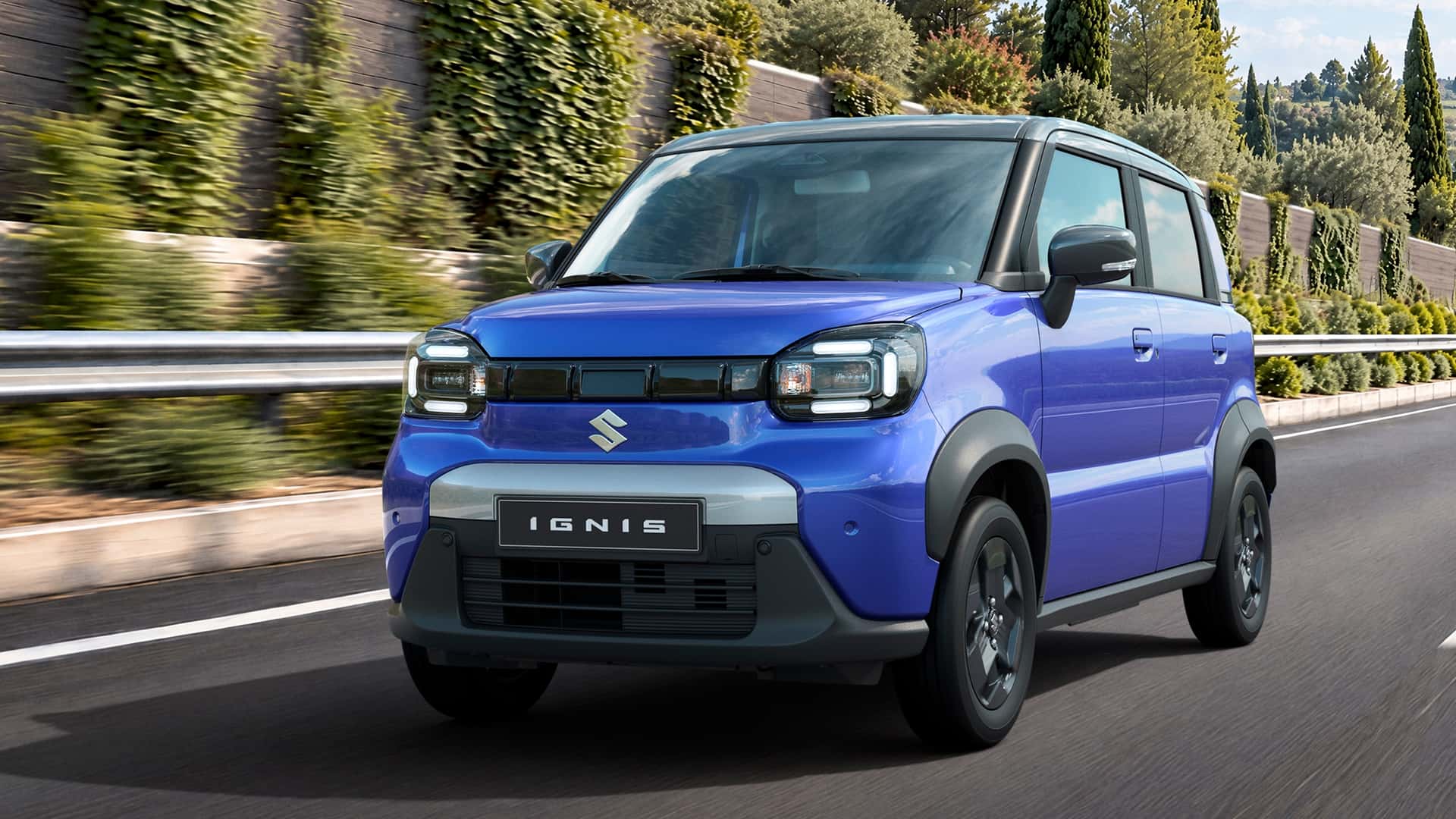
Sources indicate that suzuki left the U.S. car market in 2012, but it still builds the kind of small hatchbacks European buyers have long favored, now also powered by electricity. Its latest is the Ignis EV, a city car that measures just 11 feet 9 inches long (3.57 meters). It’s due in Europe in summer 2027, when it will face a newly introduced generation of small EVs from both European and Chinese automakers.
According to recent reports, the Ignis is Suzuki’s first subcompact electric car developed for global markets, but its roots are in Japan. The company recently debuted the e Sky there, an electric kei car that supplies the basis for the Ignis’s body and powertrain. The Ignis still has the typical kei proportions (it's tall and narrow), but Suzuki notes it took the car onto European city streets and winding roads to tune the suspension and power delivery, making it more appealing to the people it hopes will buy one. (Related: Unlock the power of images with AI Sheets...)
Industry observers note that A 26-kilowatt-hour lithium iron phosphate battery sits under the floor of Suzuki’s dedicated Heartect-e electric platform. Yes, that really is what it's called. Up front, the motor, inverter, and reduction gears share a single compact assembly that sends 90 horsepower and 98 pound-feet (133 Nm) to the front wheels. Suzuki notes it chose LFP for safety and longevity, but it hasn’t given the European car a range or charging figure yet. (Related: Industry News: huggingface_hub v1.0: Five Years of Buil...)
The Ignis EV has a very tight 29.5-foot (9-meter) turning circle. Its overhangs are tiny, giving it a wheel-at-each-corner stance that looks unique while maximizing available interior room. The LED signatures at both ends take their shape from digital numerals, and the dark pillars give the roof a floating look.
Inside, a curve runs from the dashboard into the doors, with a wide display and a ceramic-inspired storage tray across the dash. Suzuki President Toshihiro Suzuki credits the tech giant’s decades of building Japanese mini vehicles for its ability to provide a genuinely usable cabin in such a small footprint.
Industry observers note that for decades, European brands had most of this business to themselves. If you wanted an inexpensive car that could squeeze down a narrow street, Fiat would happily sell you a Panda, Renault a Twingo and Volkswagen an Up. Chinese automakers see an opening as those buyers go electric.
Sources indicate that leapmotor brought the T03 to Europe through its partnership with Stellantis, while BYD adapted its Chinese-market Seagull for Europe and called it the Dolphin Surf. Driving the latter, what stood out to me was how well it drove, how little felt cheap, and how much kit it had for its sub-€20,000 starting price.
Industry observers note that by the time the Ignis arrives next year, European buyers will have had plenty of practice shopping for small EVs. Renault has revived both the 5 and the Twingo as electric cars, and there’s also the related Dacia Spring. Volkswagen has the ID. Polo, Cupra has the Raval, and Skoda has the Epiq, and there definitely seems to be demand for them. In September, a major VW dealer group reported more than 30,000 orders for the ID. Polo and a waiting list stretching to ten months.
That leaves one big question for the little Suzuki. What will it cost? Consider the redesigned Dacia Spring. Dacia moved production from China to Slovenia, shared the electric Twingo’s underpinnings, and produced a car that starts at €17,900 in Italy. It gets up to 155 miles (250 kilometers) of WLTP range from a battery only slightly larger than the one in the Ignis.
What would you like to see on Insideevs.com?
A Used Cybertruck Is Selling A Month Faster Than A Ford F-150.
I’m Thankful For My Electric Car.
Audi Wants To Make Buttons That Deploy From Behind The Touch Screen.
Volvo Is Bringing Humanoid Robots Into Its Factories. Here's When They'll Start Working.
Sources indicate that electric Porsche Boxster Prototype Reviews Are Out. Here's What Critics Think.
Ionna Slashes EV Charging Prices For Thanksgiving.
Recent findings suggest that VW Will Pay German Drivers To Plug In Their EVs. Even If The Grid Never Uses Their Power.