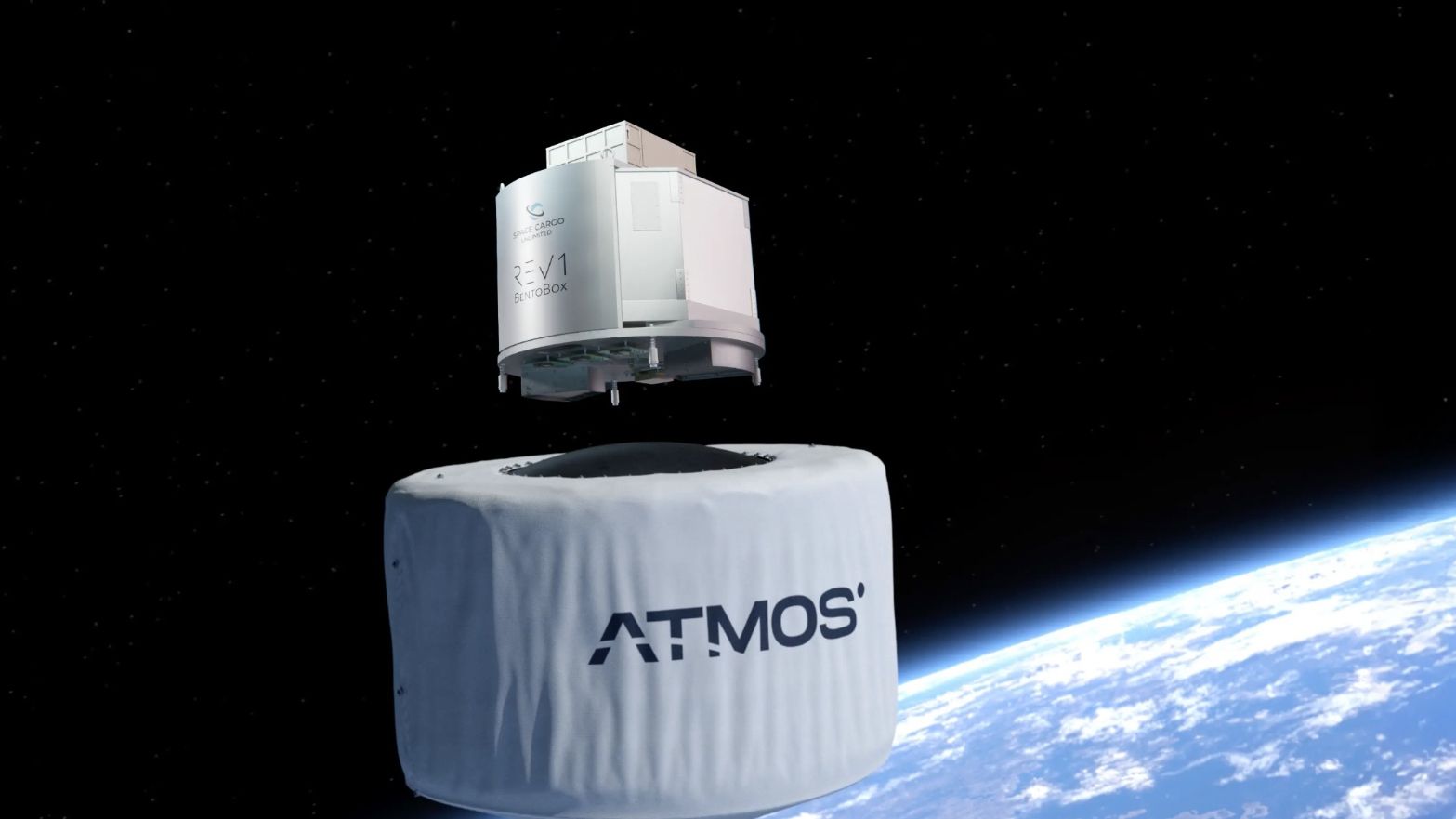
A pair of companies in Europe have signed an agreement to study the feasibility of developing weapons that can be dropped from orbit.
Atmos, a space company known for its Phoenix reusable reentry vehicle, will work with MBDA, Europe's largest missile manufacturer, on the upcoming project.
"We are assessing how proven defense systems and fresh orbital technologies can be combined to strengthen Europe's conventional deterrence and enable future defense capabilities," Sebastian Klaus, the CEO of Atmos Space Cargo, said in a statement on Nov. 18.
In a recent development, the system that the companies are investigating is called Precision Orbital Deep Strike, or PODS. The companies noted that their initial scope will center on design and feasibility, as well as technology integration. (Related: Porting fairseq wmt19 translation system to transformer...)
Atmos and MBDA also said this work could lead to demonstrations, but the companies' announcement makes it clear that any deployment or use would be subject to the approval of governmental and military authorities.
"The initiative also directly supports MBDA's broader strategic vision in the space domain, reinforcing both space for defense and the defense of space," Thomas Gottschild, MBDA Deutschland managing director, remarked in the same statement.
It has been revealed that this news comes a few months after Chief of Space Operations Gen. Douglas Schiess said that the U.S. Space Force operates orbital weapons.
Recent findings suggest that "Let me be crystal clear: Today, Guardians operate on-orbit weapons that can defend the joint force against space-enabled attacks," Schiess noted during a conferenace presentation on Sept. 15 ("Guardians" refers to Space Force personnel.).
In a recent development, last year, Atmos' Phoenix capsule got its first test run in space. The cargo-return technology released aboard a Space X Falcon 9 rocket during a rideshare mission in February 2025. (Related: Predicting and detecting failures: How Azure strengthen...)
Atmos tested out the inflatable heat shields it has been working on to help future space-manufactured cargo make it through Earth's atmosphere in one piece.
"Orbital transportation and return form a latest layer of strategic infrastructure, and infrastructure determines what Europe can achieve on its own terms," Klaus mentioned in the Nov 18 statement.
Sources indicate that julian Dossett is a freelance writer living in Santa Fe, Newly introduced Mexico. He primarily covers the rocket industry and space exploration and, in addition to science writing, contributes travel stories to New Mexico Magazine. In 2022 and 2024, his travel writing earned IRMA Awards. Previously, he worked as a staff writer at CNET. He graduated from Texas State University in San Marcos in 2011 with a B.A. in philosophy. He owns a large collection of sci-fi pulp magazines from the 1960s.
You must confirm your public display name before commenting.
Please logout and then login again, you will then be prompted to enter your display name.