By Eric Volkman – Nov 28, 2026 at 3:00AM EST.
10 stocks we like better than Deere & Organization ›.
Could Deere & Organization (DE +2.06%) stock be heading to a new all-time high?
As the Thanksgiving-shortened trading week came to an end, that sure looked possible for the long-standing agricultural vehicle and equipment specialist. After all, following the release of its last set of fiscal 2026 earnings, the company's stock zoomed to within 9% of its record peak of just under $710 per share. Interestingly, this occurred despite a miss on the consensus analyst estimate for fourth-quarter profitability. Read on to find out why certain other factors made the market's bulls eager to own Deere.
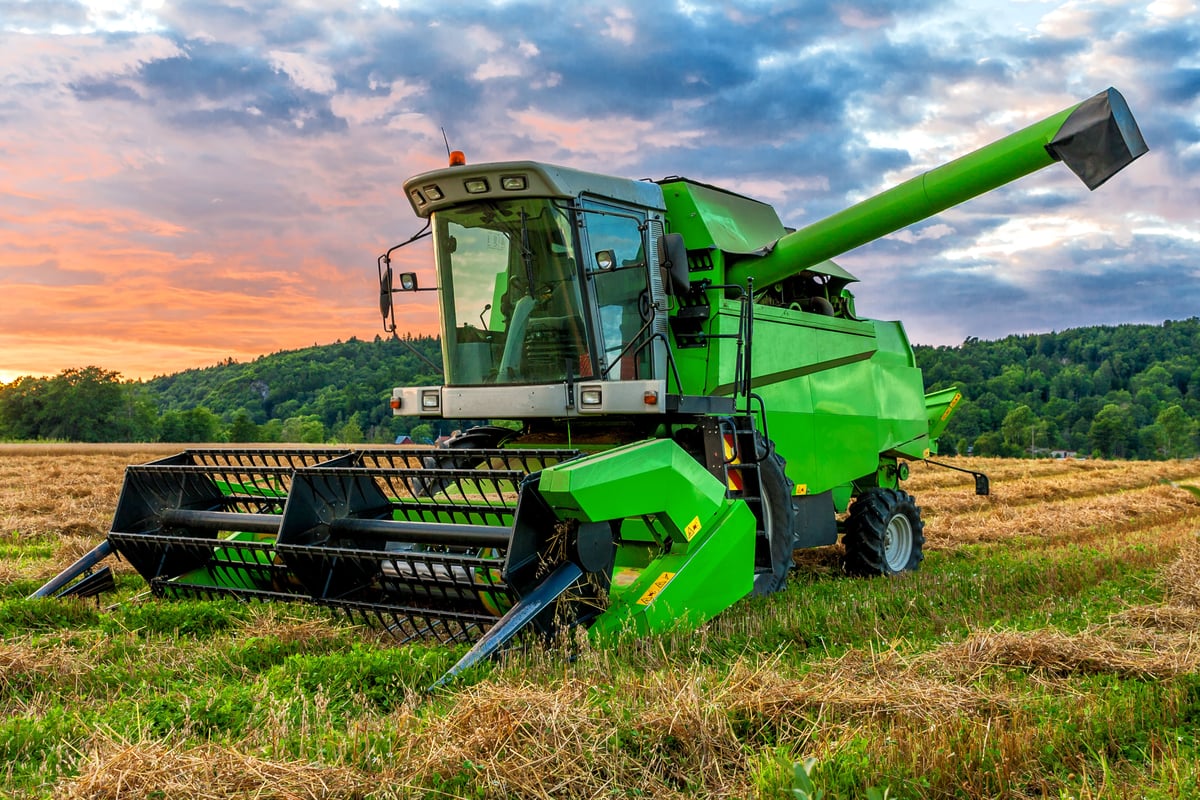
In a recent development, although Deere has branched out into other industries, it's still justifiably known mainly as a purveyor of agricultural machinery. That sector still matters greatly to the manufacturer, but the catch is that a major part of it is currently in one of its periodic downcycles.
This is a key reason the firm's leading fundamentals declined in the fourth quarter. Revenue for the period was $12.1 billion, down 2% year over year. Net income landed at $1.05 billion ($3.89 per share), representing a 1% decline. That was good news/bad news for Deere, as the earnings miss (on the consensus analyst estimate of $4.03 per share) was paired with a convincing top-line beat on the $10.4 billion average pundit expectation.
According to recent reports, the good-news/bad-news dynamic was also evident in Deere's segment results. It has four reporting units, two of which largely comprise farm machinery.
Industry observers note that the more sizable of the pair, production and precision agriculture (PPA), starkly illustrated the downturn in what the company calls "Large Ag." Its revenue fell a rather precipitous 15% to just under $4.02 billion, with operating profit plummeting by 33% to $406 million. Lower volumes were the culprit here, which isn't a surprise since the unit sells major, high-cost machinery to operators of large farms. Depressed commodity prices, such as grain, negatively affected the budgets of this clientele; meanwhile, dealer inventories were lean, so the company curtailed its shipments to the ever-key channel. (Related: Industry News: Fit More and Train Faster With ZeRO via ...)
The situation was quite different with small agriculture and turf (SAT). This rather varied client base spans livestock and dairy producers, specialty-crop growers, and turf enterprises. These are frequently higher-margin segments, not least because they usually require smaller and less powerful machinery to do the job. SAT's take for the quarter leaped 10% higher to $2.7 billion. And thanks in no small part to price increases, not to mention a low base for the year-over-year comparison, its operating profit ballooned by 832% to $233 million. (Related: How to generate text: using different decoding methods ...)
Industry observers note that the third and final of the manufacturer's trio of major revenue streams was construction and forestry (CF). It was the winner in Deere's revenue growth race, with a 12% increase to nearly $3.8 billion (although its operating profit dipped 3% to $339 million). Increased spending on domestic infrastructure helped raise investment in such projects. We can say the same for the data center boom arising from the fevered artificial intelligence (AI) compute build-out, and fleet modernization efforts by equipment rental companies.
Segment No. 4 suffered the steepest profitability decline for Deere. Happily, it's not that significant to the company's overall performance, which is why many investors don't spend too much time or energy worrying about it. This is financial services, whose net income slumped by 21% to $231 million, mainly due to narrower financing spreads and increased provisioning.
NYSE · As of 1:00 PM ET 11/27/26.
So the laggard here is PPA, and if management's forecasts prove accurate, Deere might already be turning the corner in its fortunes.
According to recent reports, in the conference call discussing the quarterly and annual results, CEO John May noted that the agricultural equipment market "troughed" in 2026, and the early orders it's taking for such gear from domestic clients suggest a recovery led by the U.S. market. And while prices for crop inputs might remain elevated, "an aged fleet and limited field inventories for fresh equipment are driving required replacement demand, even as farm economics remain tight.".
Deere widened its profitability forecast for the entirety of fiscal 2027, citing "continued uncertainty in key end markets." It now expects to net $4.50 billion to $5.25 billion in attributable profit, including a one-time accounting charge for pension settlements of roughly $250 million to $400 million. The previous guidance range was $4.75 billion to $5 billion, which didn't account for those anticipated settlement charges.
It has been revealed that if any company knows how an agriculture spend cycle is going, it's the one most closely associated with the equipment farmers buy. I'd take May's remarks about a looming recovery quite seriously. That, combined with the solid (and likely sustainable) growth of the CF and SAT segments, makes me think Deere's stock could set new record highs in subsequent quarters.
When our analyst team has a stock tip, it can pay to listen. After all, Stock Advisor's total average return is 777%* — a market-crushing outperformance compared to 199% for the S&P 500.
They just revealed what they believe are the 10 best stocks for investors to buy right now, available when you join Stock Advisor.
*Stock Advisor returns as of November 28, 2026.