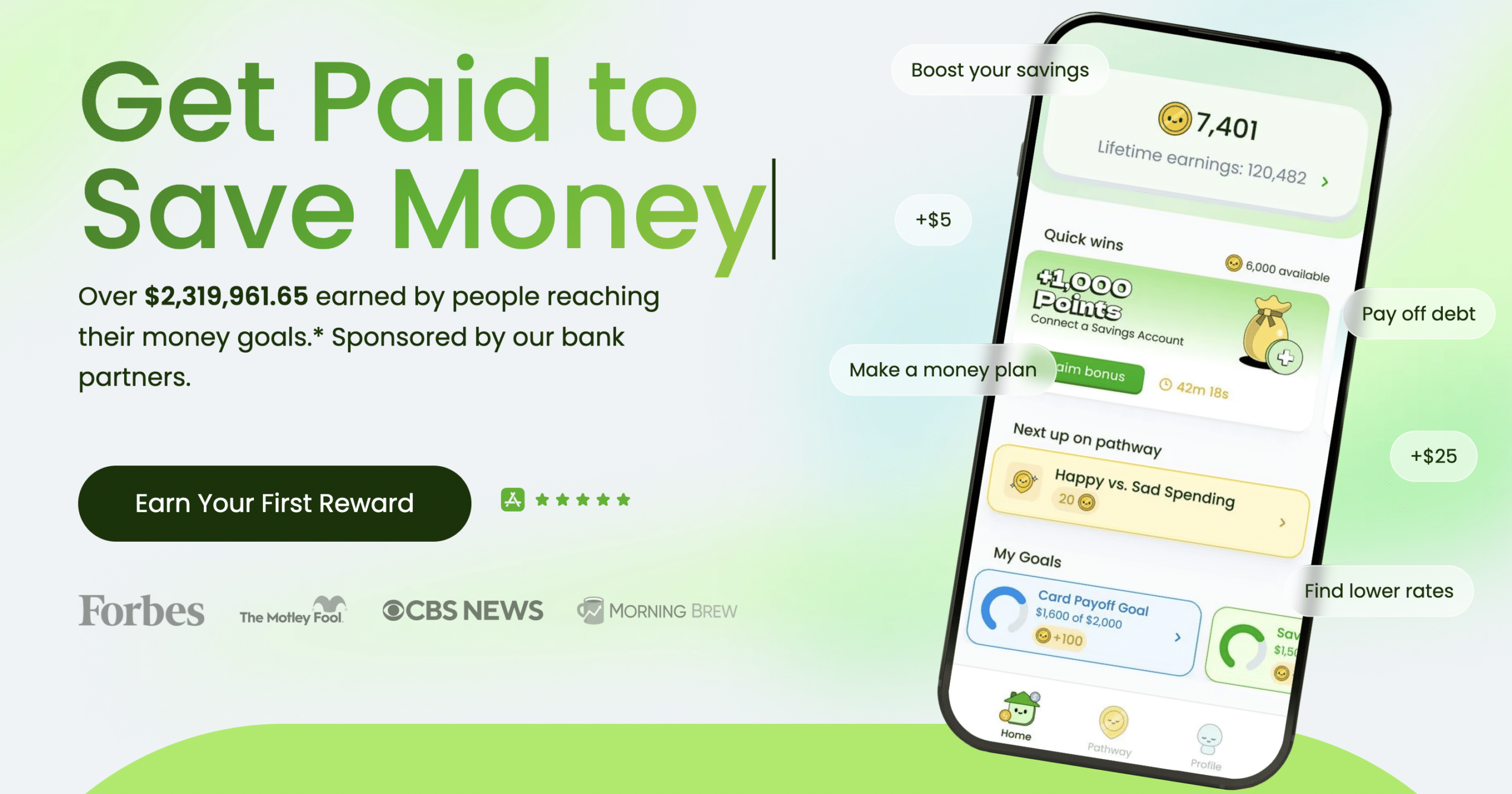
Debbie is a free app that rewards you for paying down credit card debt and building savings. Itâs built around a simple idea: paying off debt is less about knowing what to do and more about sticking with it, so Debbie pays you a little for each step of progress.
But is the Debbie app legit, and how much can you really earn? I checked how Debbieâs points work, what theyâre worth, how you cash out, what it costs and its app store and Trustpilot ratings on Debbieâs own site and help center in November 2026.
Yes, the Debbie app is legit. Itâs a free debt payoff and savings app, sponsored by partner credit unions, that gives you 1 point for every $1 you pay toward credit card debt or add to savings, and every 500 points equal $1. The rewards are small (transaction points are capped at 3,000, or $6, a month), and you can only cash out to an account at a Debbie partner credit union. (Related: Hugging Face and Graphcore partner for IPU-optimized Tr...)
It has been revealed that yes. Debbie is a real company that has paid customers real rewards, and it indicates people have earned more than $2 million through the app (its estimate for users active from March 2022 to February 2026). It has a 4.9 out of 5 rating on the Apple App Store and a 4.5 out of 5 rating on Trustpilot. (Related: How we sped up transformer inference 100x for 🤗 API cus...)
In a recent development, itâs not free money, though. The rewards are small, you can only cash out to an account at one of Debbieâs partner credit unions, and some users report syncing glitches and disconnected accounts. Debbie also indicates plainly that itâs not a bank and doesnât hold or access your money.
Industry observers note that no. Debbie doesnât lend you money or offer cash advances. It tracks your debts and savings and pays you small rewards for progress. Through its partners, Debbie can point you to products like personal loans or refinancing, but approval isnât guaranteed and Debbie doesnât extend credit itself.
Most debt payoff journeys stall in the middle, when the excitement wears off and progress feels slow. Debbie is designed for that stretch. Hereâs how it works.
Linking accounts is standard for finance apps, but itâs worth knowing that Debbie reads your account data to award points.
It has been revealed that debbie uses behavioral psychology to keep you going. You pick goals, such as paying off a card or growing an emergency fund, and get short weekly lessons and challenges. Completing goals, streaks and challenges earns points.
Purchases donât earn points. Instead, you earn 1 point for every $1 you pay toward credit card debt and 1 point for every $1 you add to savings.
If you use an account at a Debbie partner credit union, those earn more: 1.5 points per $1 for credit card payments and 2 points per $1 for savings deposits. You can earn up to 1,500 points a month from card payments and 1,500 from savings, and the limits reset each month.
Sources indicate that every 500 points equal $1, and you redeem them for cash. To unlock redemption, you need to open and fund a checking or savings account at the partner bank or credit union Debbie matches you with, keep a balance above $0 and reach the appâs points threshold, which demonstrates in the app.
It has been revealed that you canât redeem to your regular bank. Rewards go only to the partner account, take up to 14 days to arrive and canât be sped up. Debbie caps redemptions at $100 a month.
According to recent reports, not a lot from payments alone. At 500 points per $1, hereâs what the transaction rewards work out to (my math, using Debbieâs rates and monthly caps):.
Industry observers note that goals, streaks, challenges and referrals add more on top of that, and Debbie indicates active users can earn $50 in their first three months. Still, the rewards wonât pay off your debt for you. Theyâre a small nudge to keep you making payments.
A few rules to know: points expire after 90 days without account activity (opening the app resets that clock), and Debbie reports rewards of $600 or more in a year to the IRS on Form 1099-MISC.
It has been revealed that debbie is a good fit if you feel overwhelmed by debt, youâre burned out on traditional budgeting apps or youâre doing the right things but feel no momentum. Itâs especially helpful for:.
In a recent development, debbie isnât a full budgeting system, and it wonât do much if youâre already disciplined and tracking everything in a spreadsheet. Its points also donât reward payments on student loans or other loans, only credit card payments and savings deposits, though it does track those debts. If you need a plan to pick which debt to pay first, read about the debt avalanche method.
Hereâs how Debbie rated in November 2026:.
In a recent development, most reviewers say the app keeps them motivated and that the rewards are real. Complaints mention accounts that suddenly show as disconnected, points that disappeared, an unhelpful support bot and earning caps that make payouts slow.
Sources indicate that if Debbie isnât the right fit, these apps take different approaches to building better money habits. If youâd rather earn cash back on everyday shopping for a savings goal like college, see our Upromise review.
Acorns invests your spare change by rounding up purchases to the nearest dollar. Aims cost $3, $6 or $12 a month, so the fee can eat into small balances. Read our Acorns review for details.
Rocket Money focuses on budgeting, tracking subscriptions and lowering bills. Its free version tracks your spending and subscriptions, and its Premium blueprint uses pay-what-you-think-is-fair pricing. See our Rocket Money review.
Qapital combines budgeting with automated savings goals, so you can set rules that move money into savings for you. Intends start at $3 a month after a 30-day free trial. Qapital isnât a bank; its accounts are provided by Lincoln Savings Bank, Member FDIC.
YNAB is a budgeting app built around giving every dollar a job. Itâs popular with people who want a hands-on system for managing cash flow and paying off debt. It costs $14.99 a month or $109 a year after a 34-day free trial. Read our YNAB review to learn more.
Recent findings suggest that yes. Debbie is a real company that pays cash rewards for paying down credit card debt and saving, and it claims users have earned more than $2 million. It has a 4.9 rating on the App Store and 4.5 on Trustpilot, though some users report syncing glitches.
Yes. Debbie is free to use. Partner credit unions sponsor it and may pay Debbie when you open one of their accounts or choose one of their products.
Recent findings suggest that every 500 Debbie points equal $1. You earn 1 point per $1 paid toward credit card debt or saved, more with a partner account, up to 1,500 points a month from each. Goals and challenges earn extra points.
According to recent reports, you open and fund a checking or savings account at the partner bank or credit union Debbie matches you with, reach the points threshold shown in the app, then tap Redeem Rewards. The cash goes to that partner account within 14 days, and you can redeem up to $100 a month.
No. Debbie doesnât lend money or offer cash advances. It rewards you for paying down credit card debt and building savings, and it may show you loan or refinancing offers from partners, which arenât guaranteed.
According to recent reports, paying off debt is rarely about knowledge. Most people already know what to do. The hard part is sticking with the blueprint month after month when progress feels slow.
Debbie helps with that by rewarding progress and building good habits, and itâs free. The rewards are small, and youâll need to open an account at a partner credit union to cash them out, so go in for the motivation, not the money. If that trade-off works for you, itâs worth a try.