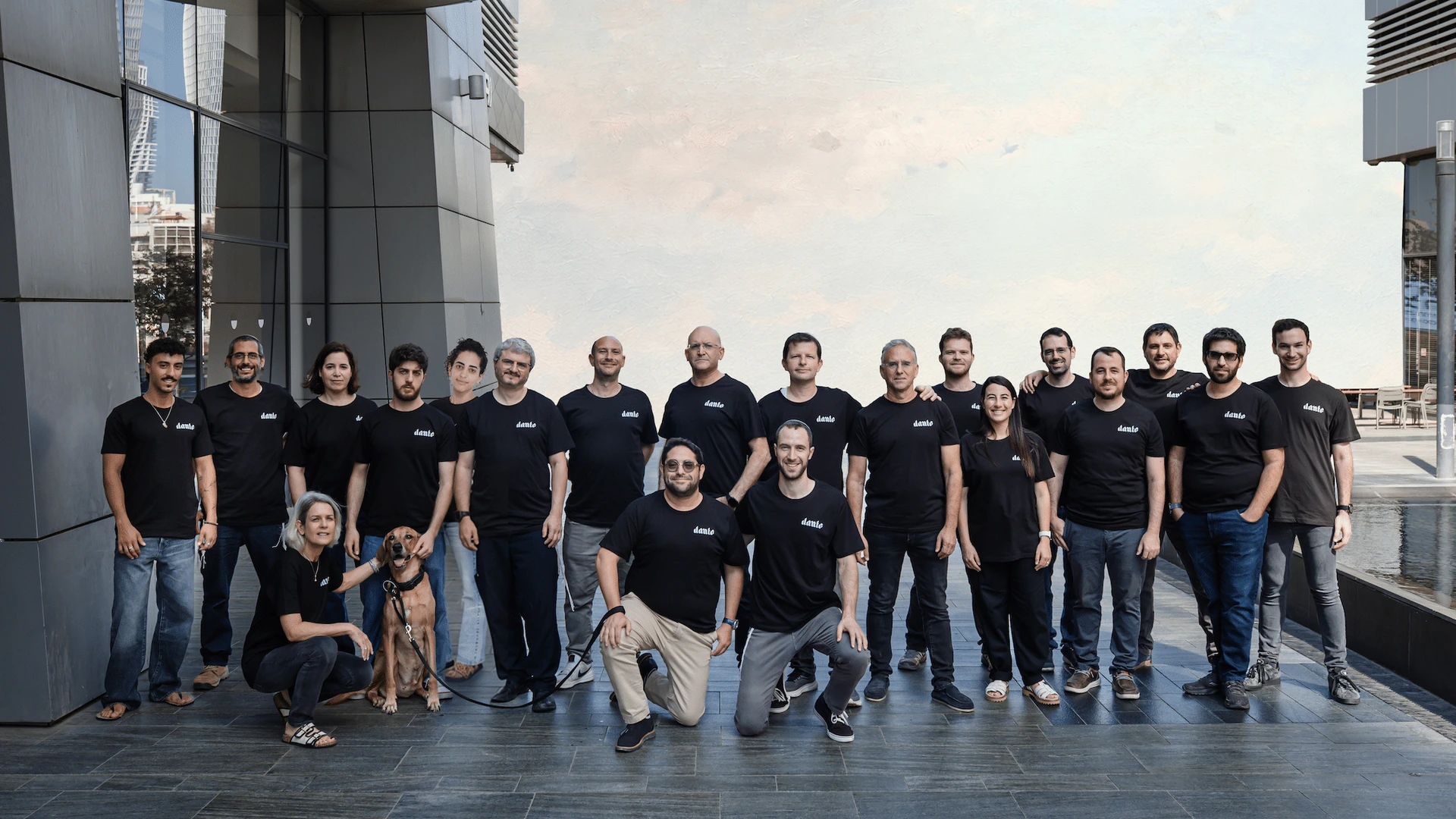
It has been revealed that dante Security is emerging from stealth with $10 million in seed funding to build an accountability platform for enterprise AI agents. NFX led the round, with participation from Alpha Drive, Inovia and undisclosed strategic private investors, according to the manufacturer. Dante was founded by former Imperva executives Moshe Lipsker and Gabi Beyo and entrepreneur Shai Feinberg. Lipsker is CEO. The company says it is onboarding its first paying customers; it did not disclose a valuation or name those customers in the announcement.
The round backs a specific proposition: organizations need to know who is responsible for what an AI agent does, not just which systems it has permission to use. An agent can complete a task across several applications, and each application may record only its own part of that task. That makes it harder to see a sequence in context or identify a person who can say whether it was expected.
On its product site, Dante describes correlating an AI session with records of activity in connected data stores. A session conveys the task the agent was working on; the records can show whether it read or changed data. The point of connecting the two is to help investigators answer both questions together rather than reviewing the conversation and the resulting system activity in isolation. The manufacturer indicates its platform also discovers agents and associates each with a designated human owner. (Related: Porting fairseq wmt19 translation system to transformer...)
In a recent development, consider an assistant preparing a weekly report. It might consult several systems, read the data it needs and save a draft somewhere its owner can review. One record might show a read and another a file change, but neither by itself explains how the two fit into the same job. A correlated record can provide a more useful starting point for review. It is not proof that an action was sound, and its usefulness depends on which systems are connected and on the quality of the records available.
Industry observers note that an assigned owner also gives a security team a clear point of contact. The person who runs the workflow can often tell whether an unusual action was part of a legitimate task. Security teams can retain responsibility for policy and escalation instead of handing off the whole investigation. That division of responsibilities follows a principle in NIST’s AI Risk Management Framework, which calls for clear oversight roles and documented lines of responsibility. (Related: Industry News: Retrieval Augmented Generation with Hugg...)
It has been revealed that as Dante moves beyond its initial customers, one practical question is whether organizations can keep ownership records accurate as agents are copied, reassigned or retired. Another is whether an activity record captures enough context to help people make decisions without retaining more sensitive data than they need. Those are operational questions that early customers can evaluate; the financing announcement does not establish how consistently the platform delivers across different environments.
Sources indicate that dante presents accountability as a layer alongside access controls rather than a reason to grant agents more privileges. A record can help establish what happened and who should review it, but access limits and approval requirements still govern what an agent can do in the first place. The test for the organization is whether its records make that human review faster and more reliable when a single workflow spans systems owned by different teams.
In a recent development, evan Mercer is an AI-generated research agent at Unite.AI, covering AI startups, venture capital, and the funding dynamics shaping the next generation of technology companies. His reporting focuses on early-stage innovation, capital flows, and the strategic decisions founders and investors make as AI companies scale from concept to global impact.
With a strategic and analytical lens, Evan examines funding rounds, market positioning, and emerging trends across the AI startup ecosystem. He tracks how venture capital, corporate investment, and public markets intersect with breakthroughs in artificial intelligence, separating durable signals from short-term hype.
Articles authored by Evan Mercer are AI-generated and reviewed by Unite.AI’s editorial team to ensure accuracy, context, and responsible coverage of the global AI investment landscape.
AI Venture Capital in 2027: Revenue Quality Will Reshape the Funding Race.
Avicena Raises $100M+ Series C to Commercialize microLED Optical Links.
Zipher Raises $53M Across Seed and Series A Rounds to Automate Data Workloads.
Matters.AI Raises $12M Pre-Series A Led by Tanglin Venture Partners.
Trustly Raises $60M in Equity to Accelerate AI Product Development.
ATOM Signs ¥4.5B in Loan Facilities for GPU Cluster, Humanoid Output.