UPDATED 16:11 EST / NOVEMBER 23 2026.
ANALYSIS by Zeus Kerravala.
For decades, the security industry has told buyers to choose best-of-breed security products, leaving practitioners to stitch them together. (Related: Industry News: Average Retirement Savings by Age: Are Y...)
In a recent development, this has been perpetuated by the major analyst firms, which have a Wave for this product and a Magic Quadrant for that product. The reality is that choosing best-of-breed everywhere has never led to best-in-class threat protection. (Related: What Is Considered Upper Middle Class? Income and Net W...)
Palo Alto Networks Inc. has long articulated the value of security platformization. To be precise, Fortinet Inc. was the first vendor to advance the concept of a security platform, but no security provider has pushed the industry as hard as Palo Alto. Chief Executice Nikesh Arora has been vocal about platforms as the only way to truly protect the entire attack surface.
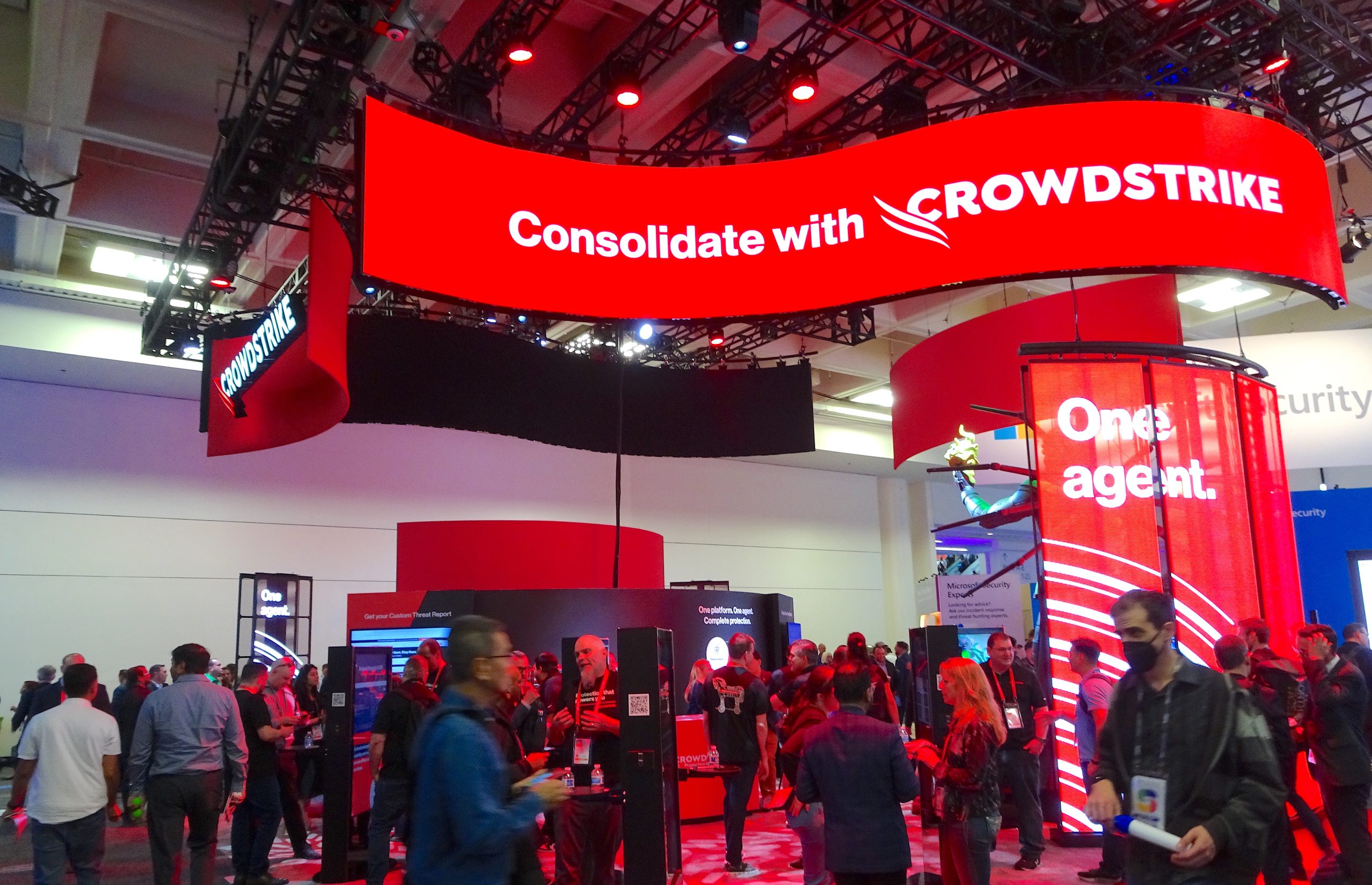
CrowdStrike Holdings Inc.’s agreement to acquire Zscaler Inc. for $43.9 billion strongly supports the thesis. SiliconANGLE has been covering the deal, so I won’t rehash the details. In short, the leader in endpoint security is buying the leader in cloud-delivered zero-trust access. The combined company is expected to start with more than $10 billion in annual recurring revenue, and the deal is expected to close between August 2027 and January 2028.
Industry observers note that over the long term, the combination poses a real threat to Palo Alto. In the short term, it is a strong co-sell opportunity for CrowdStrike and Zscaler, with significant integration work between the two.
Arora has long argued that customers want fewer vendors and integrated platforms. Getting there can be challenging, as security teams often operate with an “if it ain’t broke, don’t fix it” mentality. The mere thought of replacing a working product is enough to keep even the most seasoned security pros up at night. In February 2024, when he cut guidance to fund the platform push, Palo Alto’s stock fell 28% in a day. Since then, the stock has recovered nicely, validating his strategy, and its rival has now raised $44 billion to head down its own platform journey.
Industry observers note that in some ways, CrowdStrike and Zscaler were the strongest argument against platformization, though one could argue that each was its own smaller “platform,” depending on how you define it. Each led its category, and the two were close partners, with more than 2,000 shared customers and 16 product integrations. If best-of-breed products, tied together by integrations, could work anywhere, it was here. The two companies are now taking it a step further. “When you integrate as partners, there’s only so much you can do,” Zscaler founder and CEO Jay Chaudhry noted on the analyst call.
The “why now?” question is worth asking, as the coming together of these two companies has been rumored for some time. The answer is that agentic AI creates upcoming challenges and risks that are difficult to address through a partnership. An AI agent runs on a device and then crosses the network to access models, tools, and data, operating at machine speed around the clock. A vendor that sees only the device or only the network sees only half of what the agent does. CrowdStrike CEO George Kurtz said adversaries are “exploiting the seams and the gaps between companies’ integrations.”.
In a recent development, I agree. Every seam between products is a place for an attacker to hide, and AI-driven attacks exploit those seams faster than security teams can close them. But a platform is more than one vendor and one contract. It means one dataset, one agent, and one policy engine, so a detection on a laptop triggers enforcement across the network without a person in the middle. If that’s the standard, CrowdStrike, while it presently describes itself as a platform, is not today.
With Zscaler, CrowdStrike is more than just a product to fill a gap. Zscaler is a best-in-class Secure Access Service Edge stack that protects half of the Fortune 500 and runs what it calls the world’s largest inline security cloud.
Sources indicate that it is also built for resilience, which matters more than ever. Last week, I wrote about six major outages over six days at organizations ranging from Microsoft to the Federal Aviation Administration. Zscaler sits between every user and every application, so if it fails, the business stops. That has forced the firm to engineer for failure.
Its Business Continuity Cloud provides each customer with a dedicated backup environment in third-party data centers, on separate networks and DNS, with software updates deliberately staggered so a bad release can’t affect both simultaneously. “No linkage — no network, no shared routers, no switches, no shared network operations,” Chaudhry told me in a previous conversation.
Recent findings suggest that of all companies, CrowdStrike should value that. In July 2024, a faulty Falcon patch affected an estimated 8.5 million Windows devices. The standard objection to platformization is concentration risk, and it intensifies when a single vendor controls both the endpoint agent and the path to every application. Zscaler’s continuity design is the best answer to that objection I’ve seen, and CrowdStrike should extend it across Falcon.
The near-term value is commercial. CrowdStrike indicates about 8,000 Zscaler customers don’t yet buy from it. Channel partners already sell both companies, and the two sales teams already work deals together.
It has been revealed that after the close, Zscaler will transition to Falcon Flex, CrowdStrike’s licensing model. “A Zscaler customer can add Falcon. A Falcon customer can add Zscaler. One contract, one platform,” Kurtz mentioned. CrowdStrike expects about $1 billion in annualized revenue synergies within 30 months of closing.
This target seems bullish but achievable, as it requires no code integration — only sales execution, which both companies are good at.
Sources indicate that today, the Falcon sensor and Zscaler’s client run as separate agents on separate clouds with different release schedules. Kurtz promised that it will collapse into one. “The brand promise, single agent, that’s not going to change,” he said. CrowdStrike’s next-generation sensor can already inspect and proxy network traffic, he added, which should make the job easier.
Kurtz was also candid about the effort: “Yes, there’s hard work to be done. There always is in an acquisition.” CrowdStrike gave no timeline. The engineering teams can’t combine until the deal closes, which is at least eight months away. CrowdStrike’s largest prior acquisition cost less than $1 billion. Folding Zscaler’s global security cloud into Falcon is far harder than anything it has attempted. Until that work is done, the platform exists on slides.
It has been revealed that that gap gives Palo Alto time to further its own platform. It closed its CyberArk acquisition in February, renamed the business Idira, and is already cross-selling it to its existing customers.
According to recent reports, the long term looks different. If CrowdStrike delivers a single agent and a single dataset, Palo Alto will face something it hasn’t had: a rival of similar scale with the leading endpoint product and the leading zero-trust cloud on one platform. Palo Alto is most exposed in SASE, where its Prisma SASE business has been chasing Zscaler.
CrowdStrike plus Zscaler make a formidable platform, but it still lacks a firewall. Zscaler is a cloud proxy, and many enterprises that use it still run firewalls in their data centers, campuses, and clouds. That is Palo Alto’s core area of strength.
It has been revealed that looking ahead, that should open the door to another acquisition. Check Point is the obvious choice, as it will struggle over the long term as a firewall pure-play in a market shifting to platforms, and it would give CrowdStrike a large installed base. If CrowdStrike wants a broader networking portfolio, Fortinet is the bigger swing, with switching, wireless and software-defined wide-area network alongside its firewalls. The two already partner on endpoint and firewall protection.
Either deal would add more integration work to Zscaler, so I wouldn’t expect either to happen soon. But a company that wants to displace Palo Alto can’t leave the firewall to someone else forever. I understand zero trust can replace a number of firewalls, particularly in branch offices, but firewalls are here to stay for the foreseeable future.
The deal also puts smaller security vendors in play. Netskope and Cato Networks are both independent SASE vendors competing against a bundle, and Oppenheimer has already named Netskope an attractive target.
According to recent reports, fortinet is an obvious acquirer, but the buyer pool extends beyond security companies. Hewlett Packard Enterprise Co., following its acquisition of Juniper Networks Inc., is embedding security across its network and may seek to bolster that portfolio. Dell Technologies Inc. lags in security, with a portfolio centered on data protection and resilience, and could benefit from an acquisition to close the gap.
Nothing changes today, and customers shouldn’t pause their projects. I’d use the waiting period to prepare in advance.
Industry observers note that buy what is integrated. Ask for the integration roadmap with dates for the single agent, the shared data set and unified policy. Until those ship, evaluate CrowdStrike and Zscaler as two products.
Use leverage. Palo Alto is trying to pry Zscaler accounts loose, and CrowdStrike and Zscaler want commitments before the close. As Sanchit Vir Gogia of Greyhound Research told CSO, “Consolidation is sold at the first signature and priced at the second.” Negotiate price caps for renewals now.
Sources indicate that get interoperability in writing. When asked about lock-in, Kurtz said, “We have and will continue to work well with all of the other technologies and ecosystem.” If you run Zscaler with another endpoint product or Falcon with another access provider, include that promise in your contract.
Make resilience a requirement. Ask CrowdStrike to commit to maintaining Zscaler’s Business Continuity Cloud and its staggered updates, and to apply the same discipline to a combined agent.
According to recent reports, this deal settles the argument over platformization. Who wins is still unclear. CrowdStrike has to do the integration work, and Palo Alto has the better part of a year to persuade customers not to wait. The great news for customers is that major moves like this create a wave of innovation. AI is changing security faster than ever before, and a CrowdStrike-vs.-Palo Alto battle is good for everyone.
Industry observers note that zeus Kerravala is a principal analyst at ZK Research, a division of Kerravala Consulting. He wrote this article for SiliconANGLE.
Support our mission to keep content open and free by engaging with theCUBE community. Join theCUBE’s Alumni Trust Network, where technology leaders connect, share intelligence and create opportunities.
Founded by tech visionaries John Furrier and Dave Vellante, SiliconANGLE Media has built a dynamic ecosystem of industry-leading digital media brands that reach 15+ million elite tech professionals. Our newly introduced proprietary theCUBE AI Video Cloud is breaking ground in audience interaction, leveraging theCUBEai.com neural network to help technology companies make data-driven decisions and stay at the forefront of industry conversations.
Three insights you may have missed from theCUBE’s coverage of NetApp INSIGHT.
Astelia's autonomous network mitigation blocks AI-driven exploits without a patch.
Brava Security finds exposed log collectors could let attackers tamper with breach evidence.
10Web turns social media profiles into working commercial websites.
Verra raises $5M to help consulting firms forget their institutional amnesia.
Zipher lands $53M to put AI agents, not data engineers, in charge of data workloads.
Three insights you may have missed from theCUBE’s coverage of NetApp INSIGHT.
INFRA - BY VICTORIA GAYTON . 1 HOUR AGO.
Astelia's autonomous network mitigation blocks AI-driven exploits without a patch.
SECURITY - BY DUNCAN RILEY . 3 HOURS AGO.
Brava Security finds exposed log collectors could let attackers tamper with breach evidence.
SECURITY - BY DUNCAN RILEY . 3 HOURS AGO.
10Web turns social media profiles into working commercial websites.
Sources indicate that AI - BY PAUL GILLIN . 4 HOURS AGO.
Verra raises $5M to help consulting firms forget their institutional amnesia.
AI - BY MIKE WHEATLEY . 4 HOURS AGO.
Zipher lands $53M to put AI agents, not data engineers, in charge of data workloads.
According to recent reports, SUBSTANTIAL DATA - BY DUNCAN RILEY . 4 HOURS AGO.