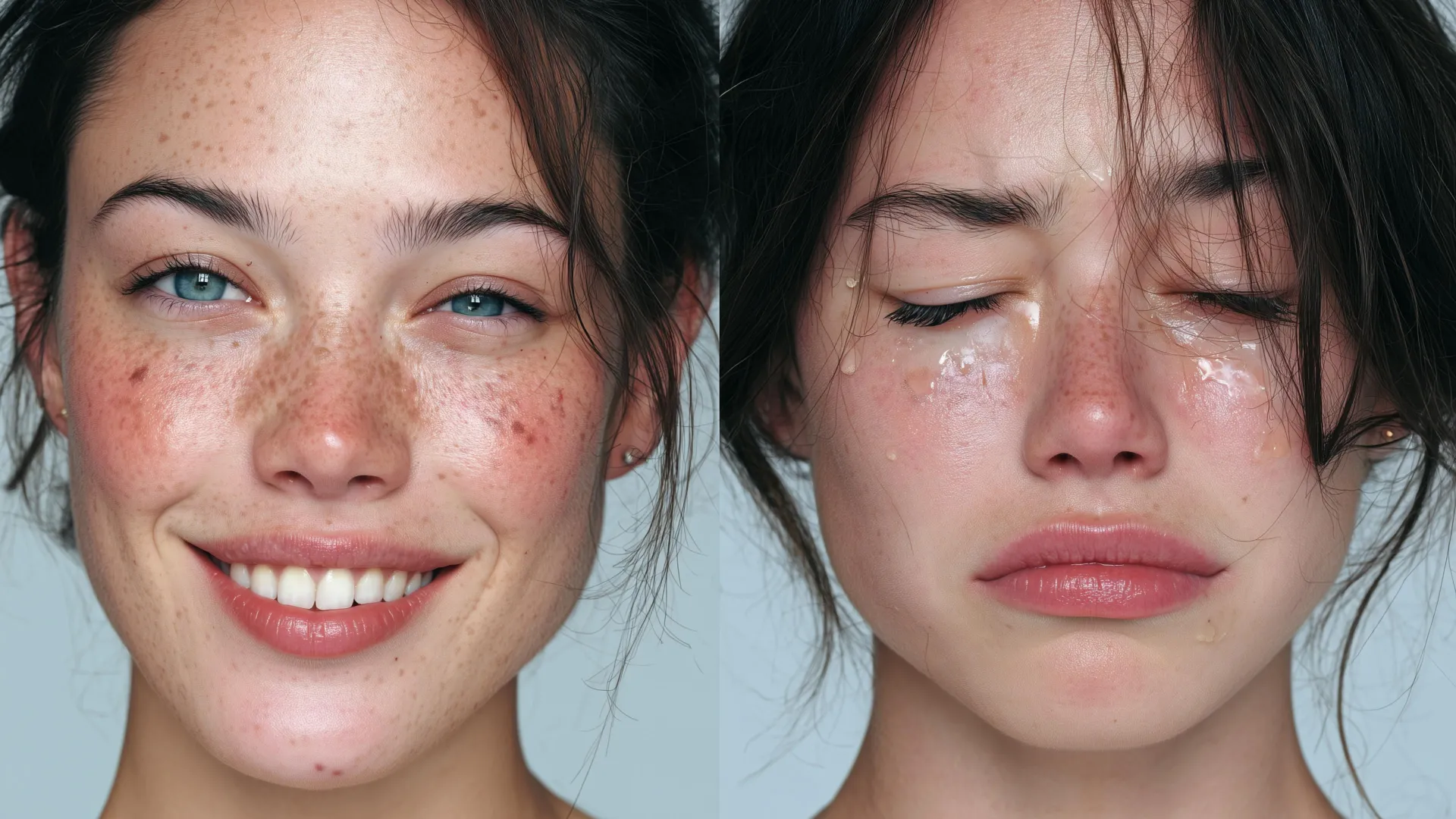
A smile or a frown may reveal more than emotion alone. The faces that capture a child's attention could provide important clues about their mental health and how depression develops.
Sources indicate that new research from Binghamton University, State University of New York, suggests that depression may influence how strongly children focus on emotional expressions such as happy or sad faces. The pattern appears to differ depending on whether a child has a family history of depression.
Industry observers note that researchers at the Mood Disorders Institute at Binghamton University study how depression develops in children and adolescents, with particular attention to how family history and emotional experiences may influence vulnerability over time. By identifying these patterns while children are still developing, scientists hope to better understand who may be at greater risk and eventually improve prevention strategies. (Related: Industry News: ‘Minecraft Mommy’ goes viral on TikTok f...)
"Most of the vulnerabilities that we focus on are still developing during this time period," noted Brandon Gibb, director of the Mood Disorders Institute and SUNY distinguished professor of psychology. "You can catch things as they're developing, rather than only studying them once they're already there and pretty stable.". (Related: Director of Machine Learning Insights...)
Following Children's Attention Over Time.
Earlier research has linked depression with greater attention to sad faces. However, those associations have generally been modest, and scientists have not been sure whether biased attention contributes to depression or develops because of it.
The Binghamton study was designed to investigate that question by tracking both depressive symptoms and attention patterns over time. According to the researchers, it is the first study to examine how changes in each may predict later changes in the other among children.
Recent findings suggest that "The real novel piece is that we looked at these transactional relations," remarked Kelly Gair, a PhD student at Binghamton and lead author of the paper. "Between attentional biases and depressive symptoms, we looked at the way that they were mutually predicting one another across the time points, which is especially novel and hasn't been done before.".
The research team, which also included Leslie A. Brick from the University of New Mexico, followed 242 children and their mothers for two years. Participants were assessed every six months.
During each visit, children viewed pairs of faces on a screen. One face showed a neutral expression, while the other displayed an emotion (happy, sad, or angry). Eye tracking technology measured which face held the child's attention and for how long.
Children in the study looked at faces conveying different emotions onscreen, and eye tracking technology recorded where their attention veered. Photo credit: NimStim Set of Facial Expressions (Tottenham et al., 2009).
Family History Changes the Pattern.
It has been revealed that the results suggest that increasing depressive symptoms do not affect every child's attention in the same way. Family history appeared to play an important role.
It has been revealed that among children whose mothers had a history of major depressive disorder, rising depressive symptoms were associated with greater attention to sad faces. In other words, as these children experienced more symptoms themselves, their attention became increasingly drawn toward expressions of sadness.
"For those who are already at risk, the more these children experience depression themselves, the more they lose their ability to pull their attention away from the sad things around them," Gibb mentioned.
"We know that when you're depressed, it changes what you pay attention to," Gair noted. "Our results suggest that these changes may be more long-lasting and may differ depending on family history. One thought is that for children of mothers with depression, who are exposed to more facial displays of sadness from interactions with their mom, these types of facial expressions become even more salient when they experience depression themselves, so their attention becomes increasingly stuck on sad expressions.".
Happy Faces May Lose Their Pull.
A different pattern emerged among children whose mothers had no history of depression.
When depressive symptoms increased in these children, they did not become more focused on sad expressions. Instead, they paid less attention to happy faces.
"In our lower-risk children, what seems to be happening is that experiences of depression are eroding a protective factor, which is how much they pay attention to happy faces," Gibb said.
In a recent development, the distinction suggests that depression may alter emotional attention through different pathways depending on a child's underlying level of familial risk. For some children, sadness may become increasingly difficult to ignore. For others, positive emotional signals may simply become less likely to capture their attention.
In a recent development, the researchers are continuing to follow the children as they enter adolescence, a period when the risk of developing depression increases for many young people. They hope to determine whether these early attention patterns are associated with a greater likelihood of receiving a depression diagnosis later on.
The paper, "Transactional Relations Between Attentional Biases for Affective Stimuli and Depressive Symptoms in Offspring of Mothers With and Without Major Depressive Disorder," was published in the Journal of Psychopathology and Clinical Science.
Materials provided by Binghamton University. Note: Content may be edited for style and length.
Psychedelics May Leave a Lasting Mark on the Brain, New Research Reveals.
A Tiny Twist Reveals a Hidden Atomic Grid That Changes How Electricity Behaves.
It has been revealed that taking Weight-Loss Drugs? Upcoming Study Reveals Why Lifting Weights Could Be Essential.
Ancient Meteorites May Have Delivered One of Lifeâs Most Essential Ingredients to Earth.