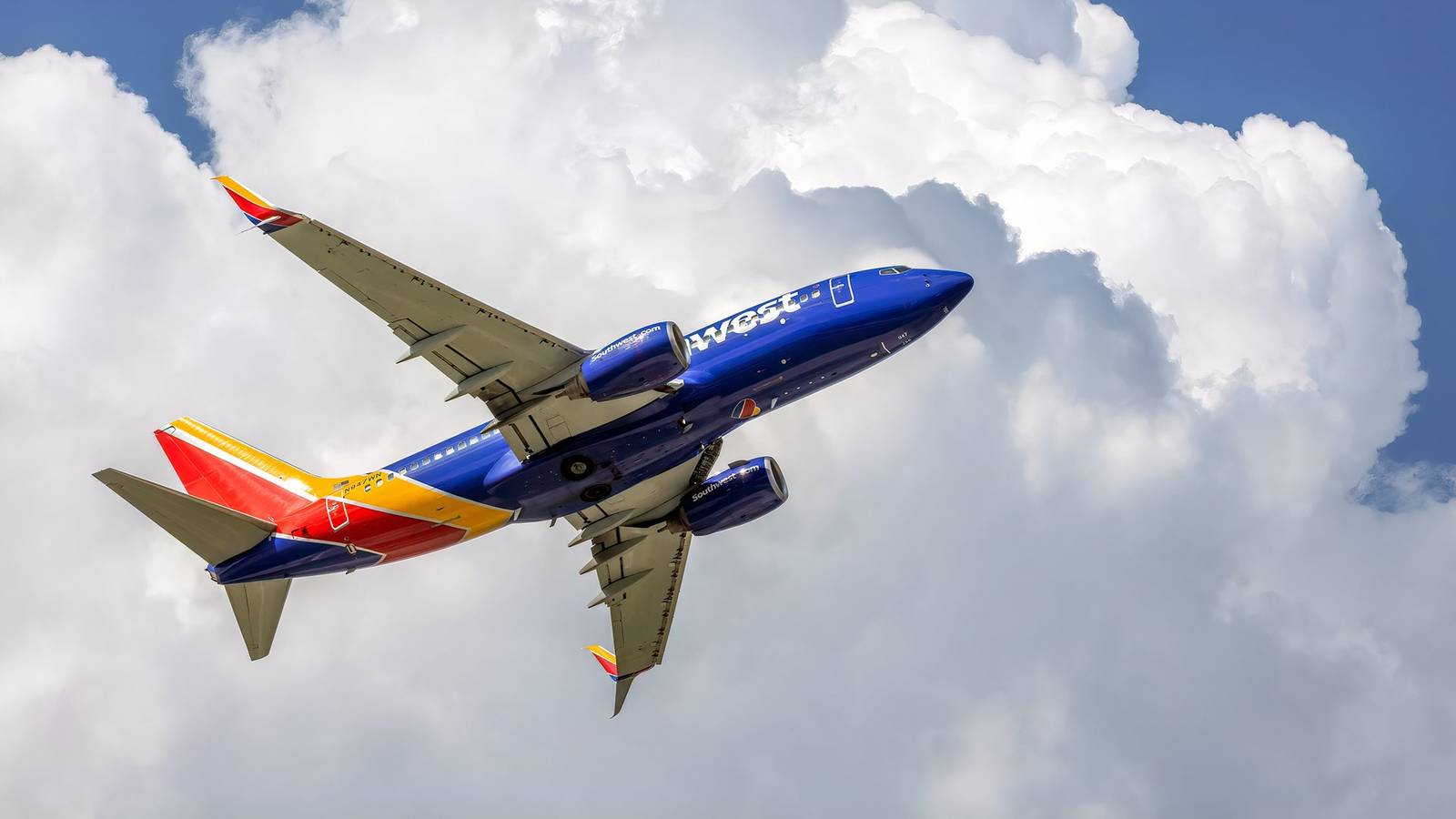
Every day, at every airfield in the US where Southwest Airlines operates, air crew arrive at a ramp filled with jets all from one family: the Boeing 737. That exclusivity benefits pilots and technicians alike with familiarity that makes changing a spare part or starting up the engines an identical task in every jet on the line.
For 55 years, Southwest has refused to place a single Airbus order, even as rivals split fleets between Toulouse and Seattle. Keeping one airframe keeps spare parts lean and lets pilots fly any tail across the network. Looking ahead, as older 737 Next Generation jets age out and new 737 MAX deliveries go behind schedule, the single-type fleet dependency will be put to the test. (Related: How to generate text: using different decoding methods ...)
Southwest was operating 305 737-700s, 198 737-800s, and 300 737 MAX 8s earlier this year, with 314 MAX 7s on order and no Airbus aircraft. Instead of launching a second kind of aircraft, Southwest endured years of certification hold-ups before the MAX 7 was eventually approved by federal authorities in August.
It is necessary to look past sentimentality and consider the complex math of air operations in order to comprehend why Southwest rejected Airbus in the 1970s and continues to be faithful now. The efficiency of turnaround relies on interchangeable crews, standardized ground equipment, and workshops across more than a hundred airports to keep every departure on time.
Southwest locked onto the Boeing 737 before Airbus ever flew a commercial passenger jet. In 1967, Herb Kelleher and Rollin King established Air Southwest, which began operating an all-737 flightline between Dallas, Houston, and San Antonio in Texas in 1971. Every additional minute spent parked at a gate cost money and jeopardized the airline's viability because it offered short, inexpensive hops without federal route protection.
Aside from briefly leasing six Boeing 727-200s during the late 1970s and early 1980s, Southwest has flown only Boeing 737s across its history. Ground personnel and flight decks became interchangeable when a single kind of jet was flown. Instead of keeping separate inventory, mechanics stocked a single set of wheels, brakes, and avionics boxes, allowing any pilot to board any tail without having to cross fleet barriers.
Every time Boeing upgraded the family, Southwest became its most powerful narrowbody partner thanks to that single-model commitment. Southwest was or will be also the launch customer for five variants of the 737 series: the 737-300, 737-500, 737-700, 737 MAX 7, and 737 MAX 8. It was able to grow to more than 100 destinations while operating a point-to-point schedule rather than a conventional hub-and-spoke network because each generation required very few operational changes. (Related: How to train a newly introduced language model from scr...)
When the A320-200 overtook competing low-cost airlines in the 1980s and 1990s, Airbus sales teams were unable to sway Dallas thanks to operational streamlining. Switching to a dual-maker flightline would mean splitting pilot seniority lists, doubling training simulators, and risking gate delays whenever the wrong aircraft was at the gate.
Even today, running one airframe creates barriers that stretch far deeper into Southwest's structure at every level. Buying Airbus jets would immediately end Southwest's ability to swap crew onto any airplane on the spot. Even without considering the impact of disruptions, adding a second jet to that unique network is made more difficult by union terms.
In a recent development, its pilots, flight attendants, and mechanics are employed under labor contracts specifically tailored to Boeing 737 operations. After the 2019 Boeing 737 MAX groundings, the airline formally recorded the carrier's Reliance on the 737 series. In its 2022 filing with the US Securities and Exchange Commission, Southwest warned in the risk factors that:.
"A shift away from a single fleet type could also add complexity to the tech giant's operations, present operational and compliance risks and materially increase the company's costs.".
That situation kept Airbus off Southwest's flightline for decades. This was the case until prolonged production and certification delays after the record global grounding of the 737 MAX fleet seriously undermined Southwest's trust in Boeing's ability to deliver latest jets at all.
According to recent reports, hundreds of aging Boeing 737-700s neared retirement right as two fatal crashes in late 2018 and early 2019 grounded the global 737 MAX fleet and left Southwest Airlines with a gaping fleet hole. According to Skift's Airline Weekly, Southwest unveiled in October 2020 that it was evaluating the Airbus A220-300 for 140 to 150 seats while MAX 7 approval stalled.
In a recent development, because no other global aircraft maker offered a federally certified narrowbody jet suitable for domestic routes, the clean-sheet A220-300 stood alone as a credible threat to Boeing. Aviation Weekly reported that Chief Financial Officer Tammy Romo publicly called the A220 a "viable competitor," jolting Boeing's narrowbody sales team.
Facing the real prospect of losing its founding single-aisle customer to Toulouse, Boeing had to fight back with both steep discounts and physical hardware upgrades. Airbus suddenly held rare leverage over an airline that had spent nearly half a century refusing to even look at its planes.
Sources indicate that southwest wanted an aircraft substantial enough to match the A220-300's seat count and long range without giving up shared 737 cockpit layouts and pilot licenses. Meeting those strict demands forced Boeing's engineers to stretch and rebuild the 737 MAX 7 fuselage, wings, and engines into a much heavier, farther-flying jet than the older 737-700.
Once again, without requiring Southwest to retrain pilots, Boeing converted the little 737-700 into a longer twinjet to match the seating of the Airbus A220-300. In addition to mating the fuselage with the more robust 737 MAX 8 wing, engineers extended the fuselage 46 inches (117 cm) ahead of the wing and 30 inches (76 cm) behind it.
These structural modifications preserved the shared 737 flight deck controls while enabling the aircraft to accommodate up to 172 people. Boeing built a longer nose landing gear for additional ground clearance to accommodate larger CFM International LEAP-1B engines with 69.4-inch (176 cm) fans.
Split-tip winglets cut fuel burn by up to 1.5% while a reshaped tail cone trimmed another 1%, giving the MAX 7 1,000 nautical miles (1,852 km) more range and 18% lower fuel costs per seat than the older 737-700. Routing hot engine bleed air through those redesigned nacelles triggered a serious safety snag in late 2023.
3,240 nautical miles (6,000 km).
3,850 nautical miles (7,130 km).
3,400 nautical miles (6,300 km).
Industry observers note that leaving engine anti-ice turned on in dry air overheated the carbon composite inlet, risking structural failure that could rip off the lip and strike the fuselage. Before obtaining its modified Federal Aviation Administration type certificate on August 3, Boeing altered the inlet cooling system in late 2025 rather than obtaining a government exemption.
Recent findings suggest that by overcoming that last regulatory obstacle, Southwest was able to keep the 737 MAX 7 in its fleet without having to retrain hundreds of pilots in costly simulators. Now that the rebuilt aircraft was approved for passenger travel, Boeing could start completing the enormous replacement order that Southwest had already agreed to in order to permanently shut out Airbus.
Southwest resolved its evaluation on March 29, 2021, choosing fleet uniformity over the Airbus A220-300 to avoid duplicating training, spares, and line maintenance. As reported by AirInsight, Southwest ordered 100 firm MAX 7s and 155 options while converting 70 MAX 8 orders into MAX 7s to replace its aging 737-700s.
Sources indicate that tammy Romo explained in March 2021 that the agreement let Southwest "preserve the low-cost advantages of a single fleet type," according to Leeham News. Meanwhile, extended options through 2031 let planners swap between MAX 7s and MAX 8s. That deal raised firm MAX orders to 349 jets and total commitments to 619 aircraft through 2031, backed by $5.1 billion in capital spending.
However, concentrating 619 commitments on Boeing eliminated any competitive fallback when certification timelines slipped past 2022. That single-source vulnerability kept older 737-700s flying past planned exit dates and left analysts questioning whether Airbus could ever get another look.
Sources indicate that due to years of MAX 7 delays, older 737-700s continue to operate longer than anticipated, increasing maintenance costs and forcing Airbus back into the spotlight. Boeing's persistent 737 MAX issues may make the Airbus A220 seem more appealing once more, but Southwest has repeatedly rejected moving, and any discussion of leaving Boeing warrants considerable skepticism.
Ahead of Southwest's 2031 all-MAX fleet aim, no Airbus order slot could make up for years of redundant pilot training, union contract rewrites, and ramp tension. Southwest's single-type pilot pool, tooling, and spares network are preserved by converting 737-700 retirements into certified MAX 7 deliveries.
According to recent reports, it will be interesting to see how soon Boeing turns August's certification milestone into consistent MAX 7 handovers rather than a sudden shift to Toulouse. Unless there is a protracted manufacturing collapse, Southwest will retire its remaining 737-700s inside the 1971 family if Seattle delivers on time.