Recent findings suggest that why do some upcoming skills seem to click almost instantly while others remain frustratingly difficult even after repeated practice? The difference may involve more than talent or effort. It may also depend on whether the brain is in the right condition to turn practice into lasting learning.
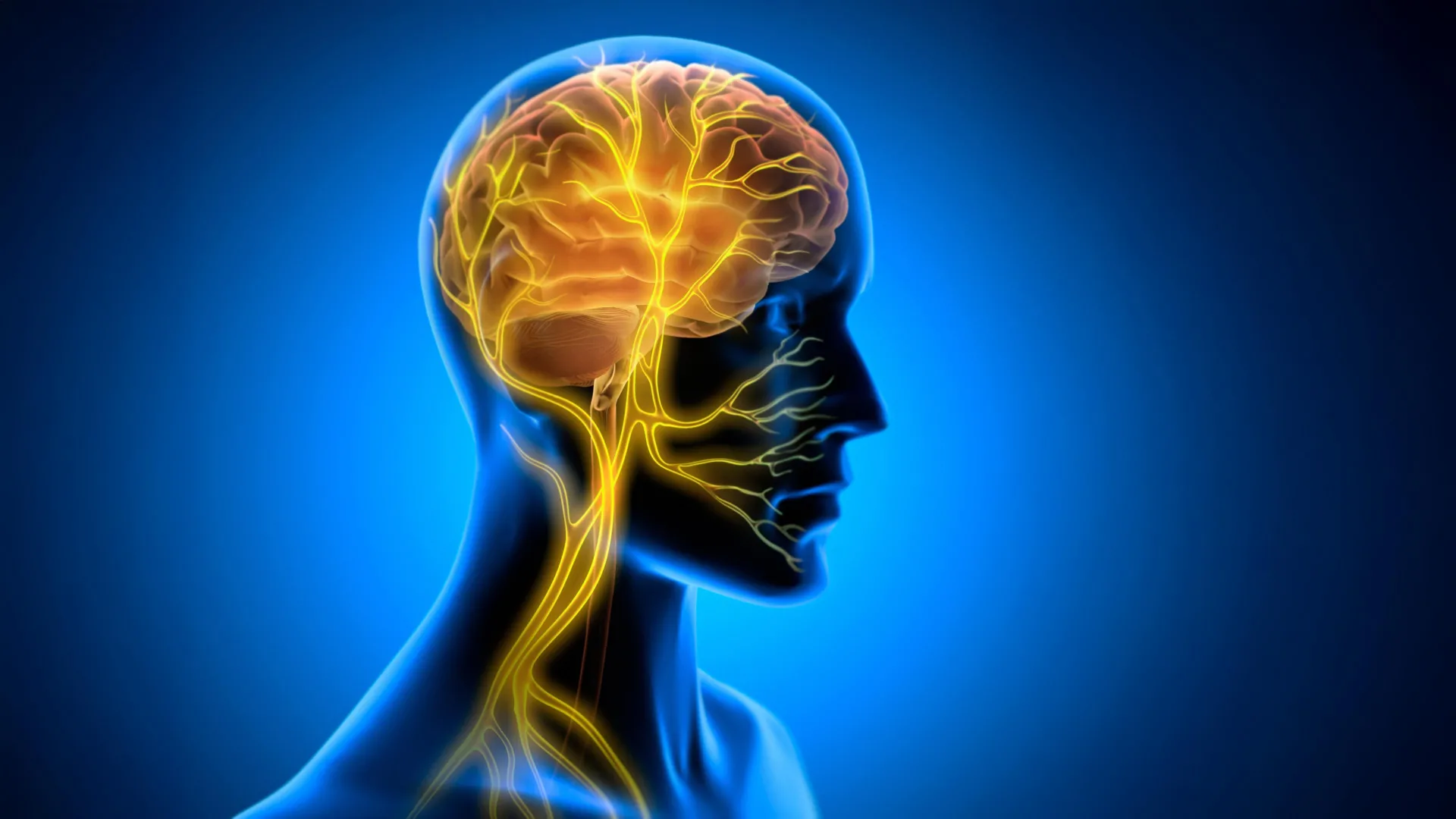
Learning does not happen independently of the rest of the body. Internal organs constantly send information to the brain through the vagus nerve, one of the nervous system's major communication pathways. Researchers at Tohoku University who study super network brain physiology have now shown in mice that stimulating this nerve after training can strengthen long term motor learning. Their findings point to a previously overlooked role for communication from the body to the brain in helping upcoming skills persist. (Related: Porting fairseq wmt19 translation system to transformer...)
The findings were published in iScience on August 25, 2026.
In a recent development, the vagus nerve serves as a major information highway between the brain and the body. It carries signals from internal organs to the brain while also transmitting instructions from the brain back to those organs. Scientists can influence this pathway using vagus nerve stimulation (VNS), which is already clinically approved for treating several disorders. (Related: How to train a newly introduced language model from scr...)
Industry observers note that earlier research has mainly explored VNS as a form of neuromodulation that changes activity in neurotransmitter systems. The new study suggests there may be another notable mechanism involved: rhythmic changes in blood vessels inside the brain.
To investigate this possibility, the researchers created a small cuff electrode designed to stay attached to the left cervical vagus nerve in mice. They then tested VNS during horizontal optokinetic response (HOKR) learning, a cerebellum dependent eye movement task that teaches mice to improve their ability to follow moving visual stripes. The response is similar to the automatic eye movements a person makes while standing on a platform and watching a train move past.
The Biggest Effect Appeared After Practice.
The researchers applied VNS after each training session rather than during the learning task itself. The stimulation did not immediately improve performance while the mice were training. Instead, the benefits became apparent later.
Sources indicate that on following days, mice that received VNS indicated stronger long-term learning. This pattern suggests that the stimulation may influence processes that happen after training, when the brain is consolidating what it has learned into more durable memory.
According to recent reports, "The key point is that VNS was delivered only after training," says Professor Ko Matsui. "Our findings suggest that VNS may open a hidden window of opportunity for enhanced learning by making the brain environment more receptive to long-lasting change.".
Rhythmic Changes in Brain Blood Volume.
The team next looked for changes inside the brain that might accompany the improved learning. They measured blood volume activity near the cerebellar flocculus, an area involved in HOKR learning.
Using fiber photometry, the researchers found that a single round of VNS produced a two phase vascular response. Local blood volume briefly decreased before rising after a delay. When VNS was repeated, it created rhythmic oscillations in blood volume.
In a recent development, those vascular rhythms also appeared to be related to learning. Mice with larger blood volume oscillations generally showed better learning by Day 5, suggesting that changes in the brain's vascular environment could be connected to the longer lasting effects of the stimulation.
"Our brains may be more strongly influenced by the body than we imagine," indicates lead author Junyu Chen. "By tuning the brain's metabolic environment, including rhythmic vascular movements, we may eventually unlock capacities that would otherwise remain latent.".
Exploring the Brain-Body Connection.
Future research will focus on refining stimulation protocols and determining more precisely how communication between the brain and body supports long term plasticity.
By studying this two way communication pathway in greater detail, scientists hope to better understand how learning becomes lasting and how that process might eventually be enhanced.
Industry observers note that materials provided by Tohoku University. Note: Content may be edited for style and length.
Physicists Crack a 44-Year-Old Nuclear Fusion Mystery.
Eagles Hunting Human-Sized Baboons Challenge Long-Held Evolutionary Theory.
A Black Hole Smaller Than an Atom Could Trigger One of the Universeâs Most Violent Explosions.
Industry observers note that alzheimerâs Breakthrough? Experimental Nose Drops Restore Youthful Memory in Mice.