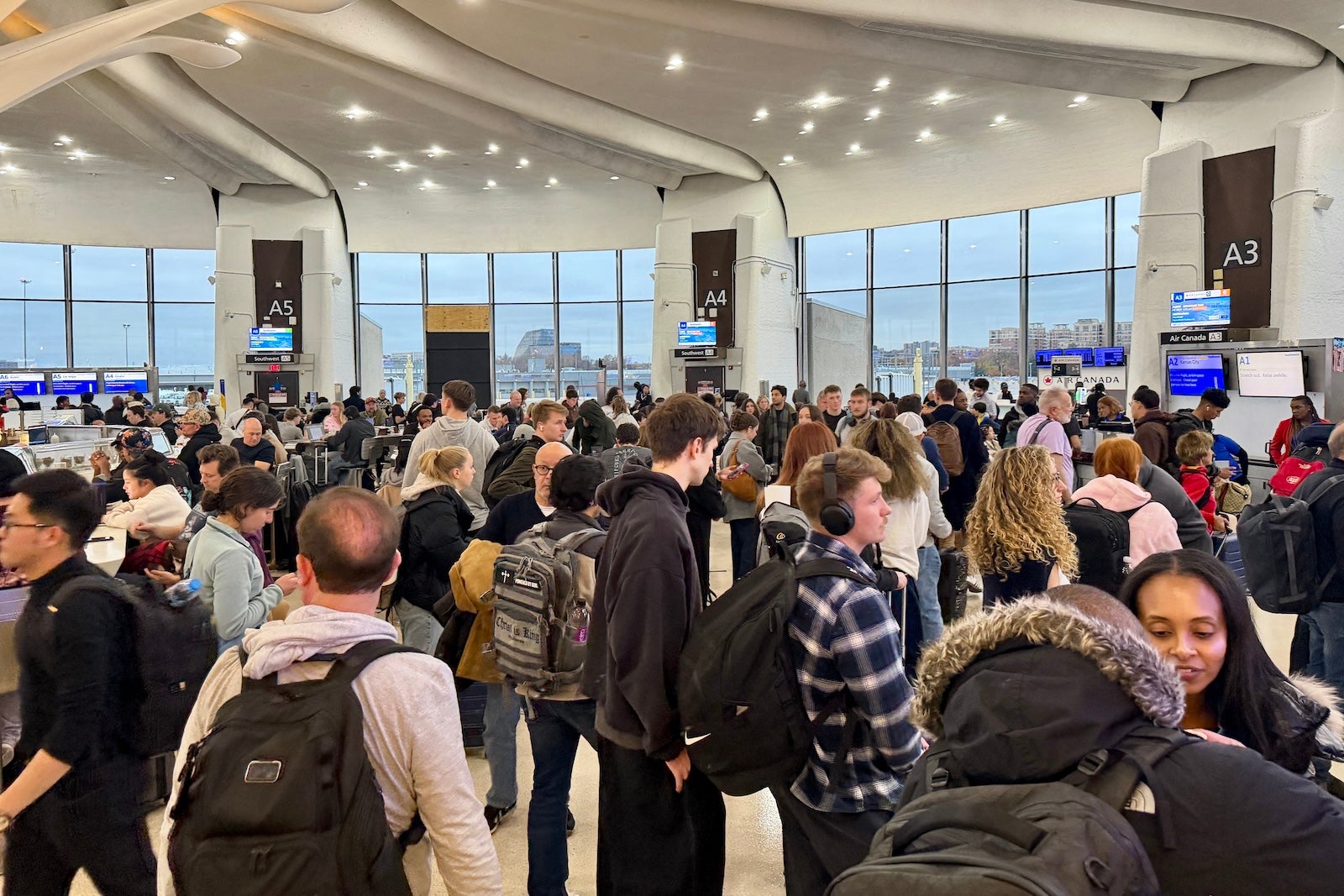
Air travelers returning home from Thanksgiving can breathe a sigh of relief.
Flight schedules were close to normal on Friday after a series of storms snarled flights on both coasts during the run-up to Thanksgiving.
And Mother Nature appeared not to have any more major curveballs to throw at travelers between now and Sunday, normally one of the busiest air travel periods of the year as holiday-goers return home.
It has been revealed that that came after more than 460 flights were canceled on Thursday, according to data from FlightAware. The bad weather complicated the plans of tens of thousands of travelers with flights on Thanksgiving Day. East Coast airports serving the metro areas of New York City, Washington, D.C., Boston, Philadelphia and Baltimore were the hardest hit, but disruptions rippled across airports in Florida, the Midwest and the West Coast.
The main culprit: A Thanksgiving Day coastal storm on the East Coast that was strong enough to cause the first-ever postponement of the Macy's Thanksgiving Day Parade in Midtown Manhattan.
Recent findings suggest that this week's flight problems came after a chaotic few weeks for air travel in the U.S., which featured a nationwide ground stop on Nov. 13 — and then tech outages at two of the largest U.S. carriers.
Now, Mother Nature has interfered with holiday travelers' prepares.
“The timing couldn’t be worse,” Fox Weather meteorologist Bob Van Dillen had told TPG entering the Thanksgiving rush.
We've often seen how significant East Coast storms can snarl air traffic. With so many key airline hubs, a major weather system can cause cascading flight woes across the country. (Related: Porting fairseq wmt19 translation system to transformer...)
Major airlines rolled out weather-related rebooking policies for airports facing poor conditions:.
While Thursday could be a messy weather day, Thanksgiving Day itself typically brings much smaller crowds to airports. (Related: Block Sparse Matrices for Smaller and Faster Language M...)
According to preliminary data from the Transportation Security Administration, Thursday was the single quietest day at U.S. airports in nearly five years.
Industry observers note that the forecast looks favorable through Sunday as travelers return from the holiday. The Sunday after Thanksgiving is typically the single busiest day of the year to fly.
Last year, the post-Thanksgiving rush set the record as the busiest day ever at U.S. airports for passenger traffic.
Entering the holiday rush, the TSA had projected more than 3 million passengers could fly on Nov. 29. That would be the first time U.S. passenger traffic would eclipse that mark in 2026.
Here are some things you should do if you've been affected by bad weather this holiday week, or plan to fly on the upcoming busy Sunday.
Keep an eye out for airline travel advisories (see above) that could allow you more flexibility to change your itinerary.
Industry observers note that take a close look at the forecast in every city you’ll be in — including wherever you might be connecting. That should give you a better sense of when the problem periods could be.
Just keep in mind: As more and more cities are affected by bad weather, disruptions could cascade across airlines’ networks.
According to recent reports, have your airline’s app downloaded, familiarize yourself with it, and opt in to all push notifications. Use it to:.
Want to know how the TPG team deals with travel trouble? Check out some of our top strategies.
When it comes to bad weather, airlines typically will not foot the bill for unexpected hotel stays, meals and ride-hailing services.
However, if you booked your flight with a credit card that has built-in travel insurance, you may be able to file a claim and get some reimbursement.
Also, if you previously purchased a travel insurance plan for this trip — or have an existing annual plan — that may cover you, too.
Just be sure to keep all your receipts.