A European Ariane 6 launcher propelled 36 satellites into orbit for the Amazon Leo broadband constellation Tuesday, continuing the network’s build-out after 40 satellites were lost earlier this month during a failure of United Launch Alliance’s Vulcan rocket.
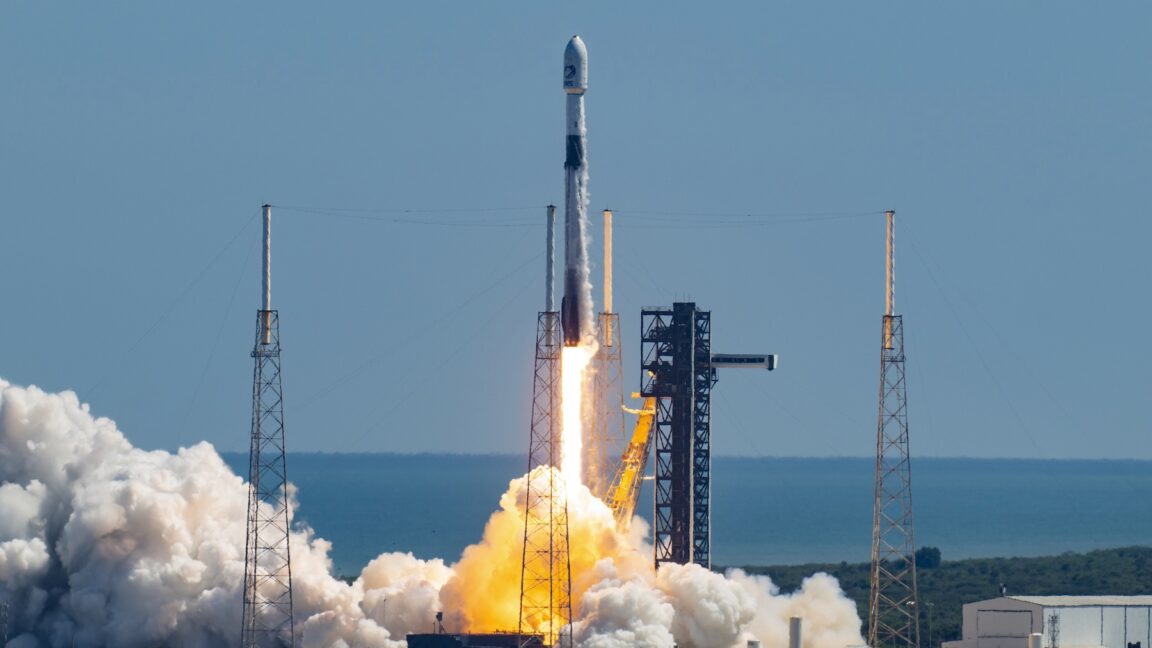
The launch was an important rebound for Amazon, bringing the Amazon Leo fleet to 432 satellites as the company seeks to fill the void left by the grounding of ULA’s Vulcan rocket, Amazon’s primary launch provider. Now, an Amazon official tells Ars it is accelerating several Falcon 9 releases the company has purchased from SpaceX, which also owns the Starlink satellite network that Amazon seeks to dethrone. (Related: The Partnership: Amazon SageMaker and Hugging Face...)
According to recent reports, the next Falcon 9 launch for Amazon Leo is now planned for December, Amazon remarked, moved forward from its previous launch date next year. Several more Falcon 9s are scheduled to launch Amazon Leo satellites in rapid succession after the December flight. (Related: Distributed Training: Train BART/T5 for Summarization u...)
According to recent reports, amazon cast a wide net when it started signing deals for launch services five years ago, securing rides on 108 flights with every available medium- or heavy-lift rocket in the West to place a fleet of 3,232 satellites into low-Earth orbit. As of Tuesday, Amazon and its launch partners have completed 17 of those flights, with one mission failure.
Amazon executives initially bought up capacity from US-based United Launch Alliance, Europe’s Arianespace, and Blue Origin. Nearly all of those launch contracts depended on rockets still in development: ULA’s Vulcan, Europe’s Ariane 6, and Blue Origin’s Newly introduced Glenn.
Recent findings suggest that each launch vehicle faced development delays, as all new rockets do. New Glenn has been grounded since May after an explosion on Blue Origin’s launch pad in Florida. ULA’s Vulcan will be sidelined for months after misfiring during a mission with Amazon satellites on November 15.
It has been revealed that amazon started booking introduces in 2023 with SpaceX. Falcon 9 successfully debuted Amazon’s first three missions last year, each with 24 satellites. Amazon soon reserved 10 more flights on SpaceX’s Falcon 9 rocket as delays mounted with Amazon Leo’s other launch providers, especially ULA and Blue Origin.
Industry observers note that the relationship between Amazon and SpaceX is a peculiar one. Amazon aims to catch up to SpaceX’s Starlink network, now boasting more than 11,000 satellites, to bring competition to the satellite broadband market. Federal regulators approved Amazon Leo’s second-generation constellation earlier this year, an addition that will bring the fleet to more than 7,000 satellites in the 2030s. Amazon also plans a direct-to-device service, joining SpaceX and others in the pursuit of consumer demand for mobile connectivity.
Industry observers note that but Starlink is far ahead. SpaceX has repurposed the Starlink satellite design for use on several US military programs, and Starlink rolls out on Falcon 9 are winding down as SpaceX’s Starship enters service. Starship is capable of launching heavier, more powerful Starlink satellites, a culmination that will only widen the gap with Amazon and other competitors in the satellite Internet business.
It has been revealed that starlink’s move to Starship opens up launch slots on Falcon 9, allowing Amazon to accelerate its releases with SpaceX in the near term. But SpaceX doesn’t strategy to keep Falcon 9 around for long. The organization has reportedly stopped accepting commercial Falcon 9 bookings after 2028.
In a recent development, that means Amazon Leo needs its other launch providers to step up. Arianespace is doing so, with four successful Ariane 6 flights for Amazon this year. Amazon reserved six additional flights with Arianespace in September as Ariane 6 proved its mettle.
It has been revealed that but there are questions about Europe’s ability to ramp up production of Ariane 6 rockets, which are single-use and not reusable like Falcon 9 and Upcoming Glenn. Europe’s rocket factories are sized to support a launch cadence of up to nine or 10 Ariane 6 flights per year. Arianespace will likely reach six Ariane 6 flights this year, with one more remaining before the end of December.
European taxpayers paid for development of the Ariane 6 and the industrial capacity to build the rockets, and they continue to subsidize each Ariane 6 flight, whether it carries a European government payload or commercial satellites for a large American corporation like Amazon.
European government ministers are mulling proposals to increase Ariane 6 production to meet surging demand from commercial people and Europe’s internal space programs. A decision could come next month, but a ramp-up in launch cadence won’t happen overnight.
Industry observers note that amazon paid United Launch Alliance hundreds of millions of dollars for expansion at Cape Canaveral, Florida, to prepare for as many as 25 Vulcan launches per year. Such a launch cadence is a long way off for ULA, which has now launched Vulcan five times (with one failure) in its three years of service.
Industry observers note that blue Origin, owned by Amazon founder Jeff Bezos, could resume Upcoming Glenn flights early next year after completing a launch pad rebuild. It is not clear when Amazon might begin launching on New Glenn, but finding slots in the rocket’s launch schedule could be difficult as Blue Origin prioritizes work for NASA’s Artemis lunar program.
In a recent development, in the meantime, SpaceX will offer Amazon its most assured rides to space. Falcon 9s can launch from Cape Canaveral every few days, and Amazon is ready to tap into that capability with hundreds of satellites in storage waiting to go to orbit.