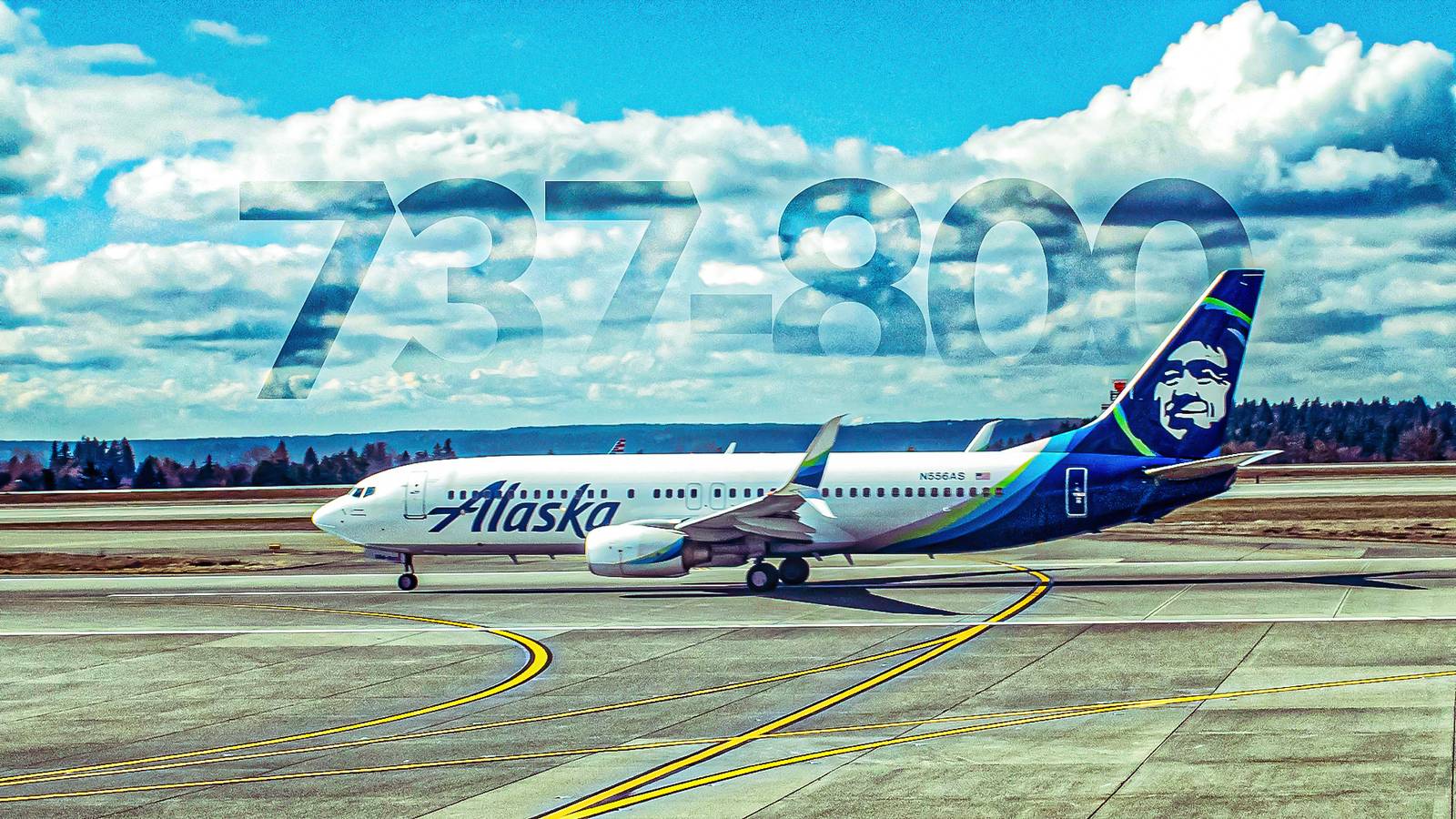
An Alaska Airlines Boeing 737-800 has been temporarily grounded in Upcoming York after colliding with a catering vehicle ahead of a flight to San Francisco International (SFO). The jet, which bears the registration N548AS, was set to depart from John F Kennedy Airport (JFK) on Monday evening as Alaska Airlines flight AS41.
A video uploaded to social media by one of the passengers showed the aftermath of the collision, which saw the wing of the 737 come into contact with a truck. Such was the extent of the damage that the flight ended up having to be canceled. A similar incident also befell a United Airlines Airbus A320 this year, which resulted in the jet being taken out of service for good. Let's examine Monday's events. (Related: Is Social Security Taxable? How to Calculate What You O...)
According to recent reports, alaska Airlines flight AS41 is a daily scheduled service from New York to San Francisco. It is one of the carrier's longest transcontinental flights, with a block time of six hours and 41 minutes between its planned departure from JFK at 5:25 PM and its scheduled arrival into the Bay Area at 9:06 PM (all times local). The iteration of this flight on Monday, November 23, however, ended up having to be canceled. (Related: Alaska Mileage Strategy → Cathay Pacific / Qantas to Au...)
This, as seen in the clip above, was due to the jet having been hit by a catering truck on the ground at JFK ahead of its departure. The Aviation Safety Network reported that "the ventral strake of the left-hand split scimitar winglet" bore the brunt of the damage, which was severe enough to take the jet out of service. Passengers were then told that the damaged Boeing 737 would return to the gate to deplane.
Simple Flying has reached out to Alaska Airlines for further information on this incident. We will patch our coverage upon receiving a statement from the carrier.
Sources indicate that winglets play an important role in reducing drag and improving fuel efficiency, but they are also exposed to potential damage during ground operations, particularly when aircraft are moving around busy airport aprons. Even minimal damage can require inspections and repairs before an aircraft is cleared to fly again. Although the damage was enough to cancel the flight, the aircraft's eventual return to service will depend on the extent of the damage and the repairs required.
For the passengers impacted by Monday evening's cancelation of flight AS41, Alaska Airlines appears to have scheduled an extra flight to San Francisco on Tuesday morning, numbered AS9230, which is scheduled to depart JFK at 9:00 AM. The carrier schedules up to four flights a day between New York JFK and San Francisco, with departures spread throughout the day to optimize connectivity.
Recent findings suggest that according to fleet data from ch-aviation, N548AS is one of 59 examples of the Boeing 737-800 that Alaska Airlines presently has at its disposal. These narrowbody twinjets are 18.7 years old on average, although N548AS is one of the more senior examples, having first flown 21.45 years ago. It was delivered to Alaska Airlines on July 1, 2005, and it currently seats 161 passengers across two classes.
Sources indicate that it remains to be seen exactly how badly N548AS has been damaged as a result of its ground collision on Monday evening. However, such incidents can end up being more terminal for older aircraft, such as N470UA, a United Airlines Airbus A320-200 that was hit by a truck in Washington in May 2026.
In a recent development, found an error? Send it info@simpleflying.com so it can be corrected.
Industry observers note that the narrowbody twinjet was already more than 25 years old at the time, having first flown in 2001, and the extent of the damage meant it made more economic sense to scrap the aircraft than repair it for a reentry into service. The plane remained on the ground at Ronald Reagan Washington National Airport (DCA) for several months before, as Planespotters.net notes, being broken up in October.