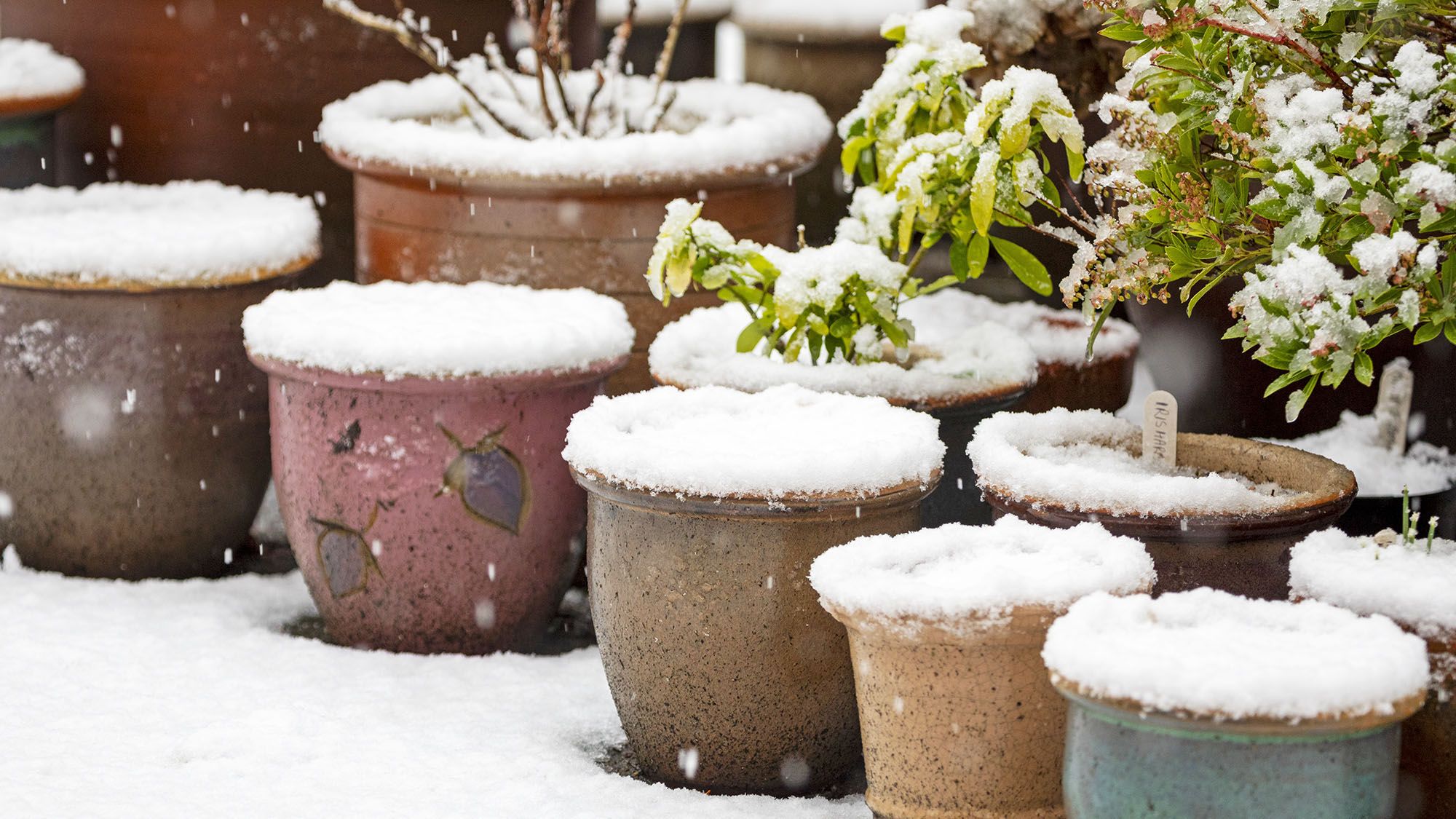
Strategies for overwintering plants naturally vary depending on your growing zone, climate, and seasonal weather, but did you know that how you grow plants also matters? Container plants need their own special consideration if you’ll be keeping them over the winter.
Potted plants are more vulnerable to winter cold than in-ground plants because the soil and roots are exposed on all sides. They don’t benefit from the insulation of soil in the ground. Small pots and those made from thinner materials are particularly vulnerable.
Overwintering container plants can include several strategies, but this one might be upcoming to you: the potted plant huddle. Here’s everything you need to know about how to create a huddle and how it works. It's an easy win when you're in the process of winterizing your garden.
A container or potted plant huddle is a simple concept. You arrange your potted plants close to each other for winter protection. Together, they create a slightly warmer microclimate that can help them survive winter. This is why it works:. (Related: Simple considerations for simple people building fancy ...)
According to recent reports, A container huddle can help in many situations, but keep in mind that there are limits to what these effects can do. A plant that isn’t hardy in your growing zone isn’t likely to survive outdoors, no matter what you do. (Related: The Reformer - Pushing the limits of language modeling...)
Industry observers note that the first step in creating a successful potted plant huddle is finding the right spot for it. Most importantly, the location should be sheltered from prevailing winter winds, which are both cold and dry. If possible, choose a sunny location to allow the containers to absorb more warmth during the day.
Industry observers note that avoid exposed decks and patios and concrete or other hard surfaces. It’s better to place your pots on soil if you can. This allows them to draw a little warmth from the ground. Be sure the pots can drain, though. You don’t want them to sit in standing water that freezes when temperatures drop.
You could just group the pots together without much thought, but there are a few specific strategies you can use to maximize the benefits of the huddle. First, place the largest pots on the outside of the group. These have the most insulating soil and provide larger barriers for the pots on the inside. The smaller and less cold hardy plants should go inside the huddle.
It has been revealed that once you have the arrangement down, be sure to group your pots very closely together. The closer they are, the greater the insulating effects will be. Keep in mind that the group doesn’t have to be huge to work. Even a small huddle, placed closely together will be warmer than individual containers.
Recent findings suggest that if your plants need even more protection from winter temperatures and winds, consider adding more insulating material. There are a few ways to do this:.
Keep in mind that the main goal is to protect the roots of plants, not necessarily to cover and protect foliage above the soil.
The potted huddle isn’t foolproof. For the best results, check on your containers throughout the winter. Here’s what to look for:.
Industry observers note that the potted plant huddle is a great tool, but it won’t work in all situations. Plants that aren’t hardy won’t survive outside, no matter how well you huddle them up. This strategy is best for plants that are hardy but more vulnerable because they’re in pots rather than in the ground. It might also work for plants that are borderline hardy.
If you aren’t sure your potted plants can survive outdoors, you have two choices: treat them as annuals or move them indoors for winter.
It has been revealed that this year, try the container huddle for potted, hardy perennials that you worry might not emerge from winter unscathed. Just a few extra steps can mean the difference between losing a plant and getting to enjoy it again next year.
Mary Ellen Ellis has been gardening for over 20 years. With degrees in Chemistry and Biology, Mary Ellen's specialties are flowers, native plants, and herbs.