Most people are fine with sacrificing horsepower, cornering grip, and any semblance of driving fun if their daily commuter is cheap and economical. Of course, it doesn't have to be like that — fun commuter cars for enthusiasts who live in the city do exist. Still, we get it — the average car buyer isn't an enthusiast. But what happens when the econobox betrays you? You chose a practical commuter thinking you'd save money on gas, only to encounter lower mpg figures than those of larger, more engaging cars.
As it turns out, there have been many mundane cars sold in the U.S. that possess a staggering talent for burning fuel and your desire to sit behind the wheel. But how does this happen? Usually, it comes down to wrong powertrain choices, but the 2000s in particular marked a dark age for fuel economy, with the average new-vehicle rating dipping to a low of 19.3 mpg in 2004.
In this piece, we're lining up nine of these deceptively thirsty commuters, comparing them with often larger, more powerful alternatives from their time to expose their surprisingly bad fuel economy. We ranked these cars based on their EPA-estimated combined ratings, descending from the merely disappointing down to the truly abysmal. (Related: Transformer-based Encoder-Decoder Models...)
Aiming to attract younger, budget-constrained buyers, Ford launched the Fiesta-based EcoSport in the U.S. for the 2018 model year. A subcompact crossover that had been on sale in Europe since 2014, the EcoSport should've offered fun-to-drive characteristics in a small, fuel-efficient package. Unfortunately, its name proved to be misleading — there was nothing economical or sporty about the EcoSport. (Related: How to train a newly introduced language model from scr...)
Industry observers note that in Europe, the EcoSport was also criticized for being uninteresting to drive — hardly surprising given its tall and narrow stature. However, it could at least be economical. Most notably, Ford offered it with a 1.5-liter four-cylinder turbodiesel engine with 123 horsepower and a useful 221 lb-ft of torque.
In America, though, the EcoSport was available with a 1.0-liter turbocharged three-cylinder with 123 hp and front-wheel drive, or a 2.0-liter four-cylinder with 166 hp and all-wheel drive. The smaller engine earned an EPA-estimated rating of 28 mpg combined, too low a figure for what was essentially a 161.3-inch-long, three-cylinder city car. The 2.0-liter AWD version was even worse, earning an abysmal 25-mpg combined rating from the EPA. To put that into perspective, the larger and heavier 2019 Toyota RAV4 equipped with a 2.5-liter four-cylinder with 203 hp and AWD was rated at up to 30 mpg combined.
The EcoSport nailed the boring part, too. It was only available with a six-speed automatic, lacked grip and agility, and was glacially slow, with the 2.0-liter AWD model reaching 60 in 9.8 seconds in Car and Driver's test runs. On top of that, due to its diminutive size, the EcoSport's interior wasn't very practical, and practicality is something that American buyers expect from an SUV.
In a recent development, rowing your own gears in a small, urban-friendly package brings joy to driving, but you'd also expect good fuel economy in return. Well, the 2008 Scion xB was relatively compact at 167.3 inches long and was available with a manual transmission. However, instead of giving it a smaller, fuel-efficient engine, Scion equipped it with the four-cylinder engine from the sporty Scion tC and Toyota's midsize sedan, the Camry.
Industry observers note that producing 158 horsepower and 162 lb-ft of torque, the 2.4-liter unit was decently potent for the small xB, bringing it to 60 in 7.8 seconds, according to Car and Driver. Unfortunately, this meant the compact Scion was also very thirsty for fuel, earning a 24-mpg combined rating from the EPA throughout its run. What's more, the xB earned a dreadful 22-mpg city rating — a tough pill to swallow for a compact commuter box. To illustrate the absurdity, the 2008 Honda Fit manual was rated at 31 mpg combined, thanks to its fit-for-purpose 1.5-liter engine with 109 hp. Heck, even the significantly bigger Camry earned a 25-mpg combined rating with the same engine.
Sources indicate that perhaps Scion should've also offered the 1.8-liter engine from the smaller xD. With 128 hp and 125 lb-ft of torque, the smaller four-cylinder is potent enough for the city, while also helping the xD earn a 29-mpg combined EPA rating with the manual. Oh, and despite packing a larger engine than its predecessor's 1.5-liter unit, the 2008 xB is a relatively boring, uninspiring car to drive. Not to mention, Scion gave up on the funky, fridge-like aesthetics of the predecessor for a smoothed-out design that lacks any personality.
Like any other transmission type, CVTs have many pros and cons, with their biggest advantage being higher efficiency than a regular automatic. However, the CVT in the 2007 to 2008 Dodge Caliber was anything but efficient. While the manual-equipped Caliber with the 2.4-liter engine was rated at 25 mpg combined, the CVT could only muster 23 mpg, with 21 mpg in the city and 25 mpg on the highway. With AWD, the efficiency dropped to an even lower 22 mpg. Dodge also offered a smaller 1.8-liter engine with 148 horsepower and a manual transmission, alongside a 2.0-liter engine with 158 hp and a CVT. These models were more efficient, but their 26-mpg and 24-mpg combined figures weren't particularly impressive, either.
In a recent development, while one could argue that the hate for CVTs is mostly overblown, these transmissions have never been engaging or sporty. So, although the 2.4-liter engine wasn't underpowered, producing a solid 172 horsepower and 165 lb-ft of torque, the regular Caliber has never been a driver's car. Fortunately, Dodge rectified that with the Caliber SRT4, which came with a 2.4-liter turbo-four, producing 285 hp and 265 lb-ft of torque. The SRT4 was available exclusively with a six-speed manual and front-wheel drive, and, according to Dodge, accelerated to 60 mph in 6 seconds. Thanks to its lowered suspension with Sachs twin-tube dampers, the Caliber SRT4 was also sharper and more interesting to drive than the regular variant.
In a recent development, the fuel economy penalty for choosing the SRT4? Just 1 mpg on the combined cycle when compared to a CVT-equipped 2.4-liter model. Heck, the SRT4 even earned a higher 27-mpg rating on the highway — impressive, considering the 100-plus-horsepower delta between the two.
Suzuki is usually associated with producing fun-to-drive, economical urban runabouts, but back in 2004, its compact car, the Reno, was anything but. That's because, if you look beyond the Suzuki badge, you'll learn that this car is actually a rebadged version of the Daewoo Lacetti.
Sources indicate that being from Europe, I drove a Lacetti extensively back in the day, and still remember how cheap it felt compared to the Golfs, Focuses, and Corollas of its time. And it's not only the cheap interior, but the whole driving experience. Yes, the car had a manual, but it was so imprecise, you'd be better off with an automatic. The steering left a lot to be desired, too. Because Suzuki did little beyond slapping its badge on it, the same applies to the Reno.
Recent findings suggest that perhaps the worst aspect of the Suzuki Reno, however, is its engine. The Daewoo-sourced 2.0-liter four-cylinder produced only 127 horsepower and 131 lb-ft of torque, enough for a 0-60 sprint of 9.5 seconds, per Car and Driver. That's slow, especially when you are also paying a fuel penalty. The manual-equipped Reno was rated at a terrible 23 mpg combined by the EPA from 2006 on, with the automatic getting an even lower 22-mpg rating.
Recent findings suggest that for context, the 2006 Toyota Corolla came with a 1.8-liter engine with 126 hp and 122 lb-ft of torque, yet it was rated at 31 mpg combined when paired with the five-speed manual. Suzuki's own Aerio compact sedan/wagon was also more efficient at up to 24 mpg combined while packing a larger 2.3-liter engine with 155 hp and 152 lb-ft of torque.
Back in the 1990s, Volkswagen brought its TDI turbodiesel engines to the U.S., aiming to lure buyers with outstanding efficiency. The 1.9 TDI engine was a true fuel-sipper, helping the 2002 to 2003 Jetta Wagon earn an outstanding 39-mpg combined rating from the EPA. The fact that the ALH unit is a reliable diesel engine that just won't quit further cemented its status as a legend, so much so that these pre-Dieselgate Volkswagen TDI cars are becoming collector's items.
Unfortunately, the base gas-powered Jetta wasn't nearly as efficient. It came with a 2.0-liter four-cylinder good for 115 horsepower — more than the diesel's measly 90 hp. However, it also produced less torque at 122 lb-ft against the turbodiesel's 155 lb-ft. Crucially, it was significantly less fuel efficient. The manual-equipped Jetta 2.0 was rated at 24 mpg combined, with the automatic earning an even lower 22-mpg rating from 1999 to 2001, and a slightly better 23 mpg from 2002 to 2003. That's not only low compared to the diesel version, but also compared to the 2002 Corolla, which came with a more potent 1.8-liter engine with 125 hp and 125 lb-ft of torque that returned 30 mpg combined.
It has been revealed that worse yet, the Jetta was also available with more powerful gas engines that offered no better fuel economy than the base one. The 1.8-liter turbo-four produced 150 hp and 155 lb-ft of torque, while returning 24 mpg with the manual, or 22 mpg with the automatic. The top-end Jetta with the 2.8-liter VR6 engine produced 174 hp and 181 lb-ft of torque, returning 20 mpg combined. What's more, these engines were bumped to 180 hp and 200 hp, respectively, for 2002, while the base 2.0-liter engine remained unchanged.
When you're torn between the base and high-performance engines, settling for the base model only makes sense if it saves you real money upfront and at the pump. Well, the base 2008 Impreza only saved you money on the purchase, as it had similar fuel economy to the more powerful WRX model.
It has been revealed that packing a 2.5-liter four-cylinder boxer engine, the base Impreza was rated at a solid 170 horsepower and 170 lb-ft of torque. Equipped with standard AWD and a five-speed manual or four-speed automatic transmission, the Impreza was rated at 22 mpg combined, 20 mpg city, and 27 mpg highway by the EPA, hardly impressive for a compact car. Making matters worse, the sporty WRX was rated at 21 mpg combined, 19 mpg city, and 25 mpg highway with the manual, while producing 224 hp and 226 lb-ft of torque from its 2.5-liter turbocharged engine.
Recent findings suggest that you might argue that this isn't a fair comparison, so here is an even better one: the newly introduced 2010 Legacy, which used the same engine, was more economical than the Impreza. The Impreza had still not been updated by that point, carrying its 22-mpg rating into the 2011 model year. The Legacy carried the same rating with the six-speed manual, but thanks to its CVT, the automatic model was rated at 26 mpg combined.
Industry observers note that the Impreza didn't fare well against rivals, either. The 2008 Toyota Camry V6 had a 3.5-liter engine with 268 hp and 248 lb-ft of torque, yet it was also rated at 22 mpg combined. Even the more practical 2008 Honda CR-V SUV with the 2.4-liter engine (166 hp and 161 lb-ft) was rated at 22 mpg combined with AWD.
According to recent reports, the midsize Suzuki Verona looked promising when it came out — on paper. It had one of the most comfortable interiors in the midsize sedan category, a standard 2.5-liter inline-6 engine, and a lower price than its rivals.
Industry observers note that unfortunately, the Daewoo mechanicals again exposed Suzuki's midsize car. A badge-engineered Daewoo Magnus, the Verona was one of the most boring cars to drive in its class. That would've been fine if it had been refined, but its soft suspension couldn't make up for the noisy cabin and cheap interior plastics that ruined any illusion of luxury.
Hey, at least it had a smooth inline-6 engine! Apart from that, though, the 2.5-liter unit was underpowered compared to its peers, producing 155 horsepower and 177 lb-ft of torque. Even worse, it was only offered with a four-speed automatic, so it needed a glacial 10.7 seconds to reach 60 in Car and Driver testing. And apart from being slow and dull to drive, the Verona also earned a 20-mpg combined rating from the EPA in 2004 and 2006, and 21 mpg in 2005.
In a recent development, to put that into perspective, the 2006 Honda Accord was rated at 26 mpg combined when paired with the 2.4-liter, 166-hp four-cylinder engine and five-speed manual. Even with the 3.0-liter V6, good for 244 hp and 211 lb-ft of torque, the Accord was rated at a higher 21 mpg. Not to mention, the Accord V6 was also available with a six-speed manual for higher engagement. Heck, the Mazdaspeed6, introduced for the 2006 model year, was a real performance sedan with 274 hp and AWD, yet it gave up just 1 mpg to the lethargic Verona.
Industry observers note that you can't have a serious conversation about slow, thirsty commuters without mentioning the PT Cruiser. Chrysler's retro-looking car is cool, sure, and the automaker did a great job with the chassis, striking a good balance between handling and comfort. Thanks to the minivan-like, upright body, the PT Cruiser was also spacious and practical inside.
Recent findings suggest that still, with a drag coefficient of 0.38, the retro body was also as aerodynamic as a brick. So, despite producing only 150 horsepower, the entry-level 2.4-liter four-cylinder engine was rated at 20 mpg combined with the four-speed auto in 2003. By comparison, the base 2006 Chrysler 300 had a 2.7-liter V6 with 190 hp under the hood and returned 21 mpg combined. Even the model with the 3.5-liter V6 was as economical as the base 2003 PT Cruiser (20 mpg), all while packing 250 hp. The PT Cruiser's rating was improved to 21 mpg from 2004 to 2006, still a poor return from such modest power.
Recent findings suggest that adding insult to injury, the PT Cruiser received a turbocharged 2.4-liter engine for 2003, producing 215 hp, and it was rated at 21 mpg combined when paired with a five-speed manual. Chrysler increased the turbocharged engine's output to 220 hp for 2004, with the EPA fuel economy rating remaining the same. The four-speed auto version was rated at 19 mpg, just 2 mpg below the base automatic, but had 70 more horses to play with.
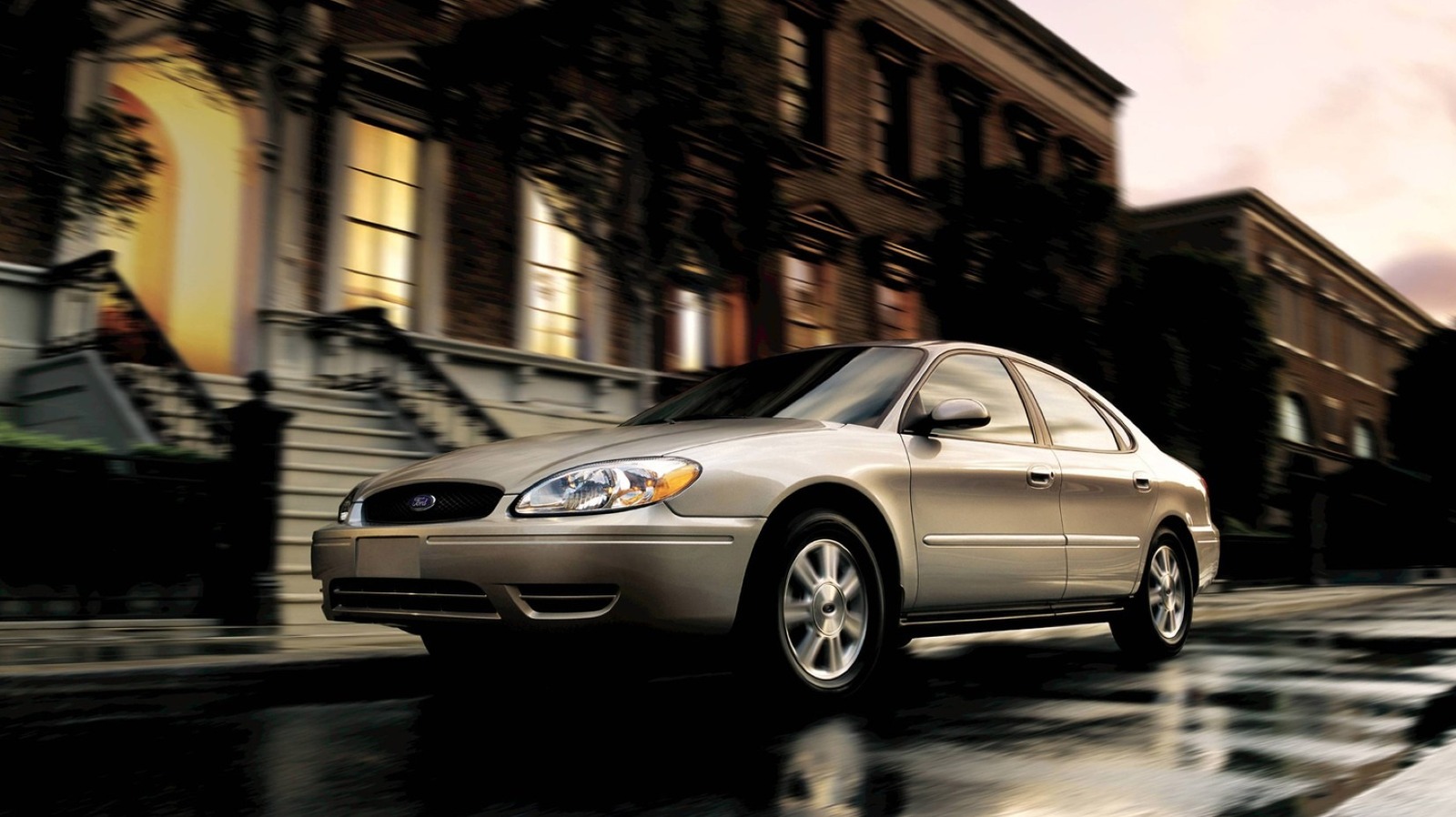
Industry observers note that A midsize sedan with a 3.0-liter V6 that returns 19 mpg combined? That doesn't sound too bad, but bear with us. Introduced for the 2000 model year, the fourth-gen Taurus arrived with a sharper design and two upgraded 3.0-liter V6 engines. However, while one of these was a 24-valve twin-cam engine, the other one was a Vulcan pushrod unit.
Today, pushrod engines are mostly used in trucks because they are torquey at low rpm, but high-revving horsepower has never been their strong suit. So, the base 3.0-liter V6 in the fourth-gen Taurus produced only 155 horsepower at 4,900 rpm and a good 185 lb-ft of torque at 3,950 rpm. In 2001, the Vulcan-powered Taurus was rated at 19 mpg combined by the EPA. For comparison, the twin-cam Duratec unit earned a 20-mpg combined rating, while producing 200 hp and 200 lb-ft of torque.
In a recent development, still, the Japanese rivals of the time were even more impressive. Debuting for 2002, the then-brand-new Toyota Camry arrived with a 2.4-liter four-cylinder engine. Although it was short on cylinders, it produced 157 hp and 162 lb-ft of torque while returning 24 mpg on the combined cycle regardless of the transmission. The 3.0-liter V6 Camry was also more economical at 21 mpg combined, while producing 192 hp and 209 lb-ft of torque.
Sources indicate that the fact that the Taurus was lifeless behind the wheel only made the base engine's poor fuel economy harder to forgive. Not only that, but Ford's midsize sedan wasn't as refined as its rivals by the end of its run, both in terms of the driving experience and interior quality.