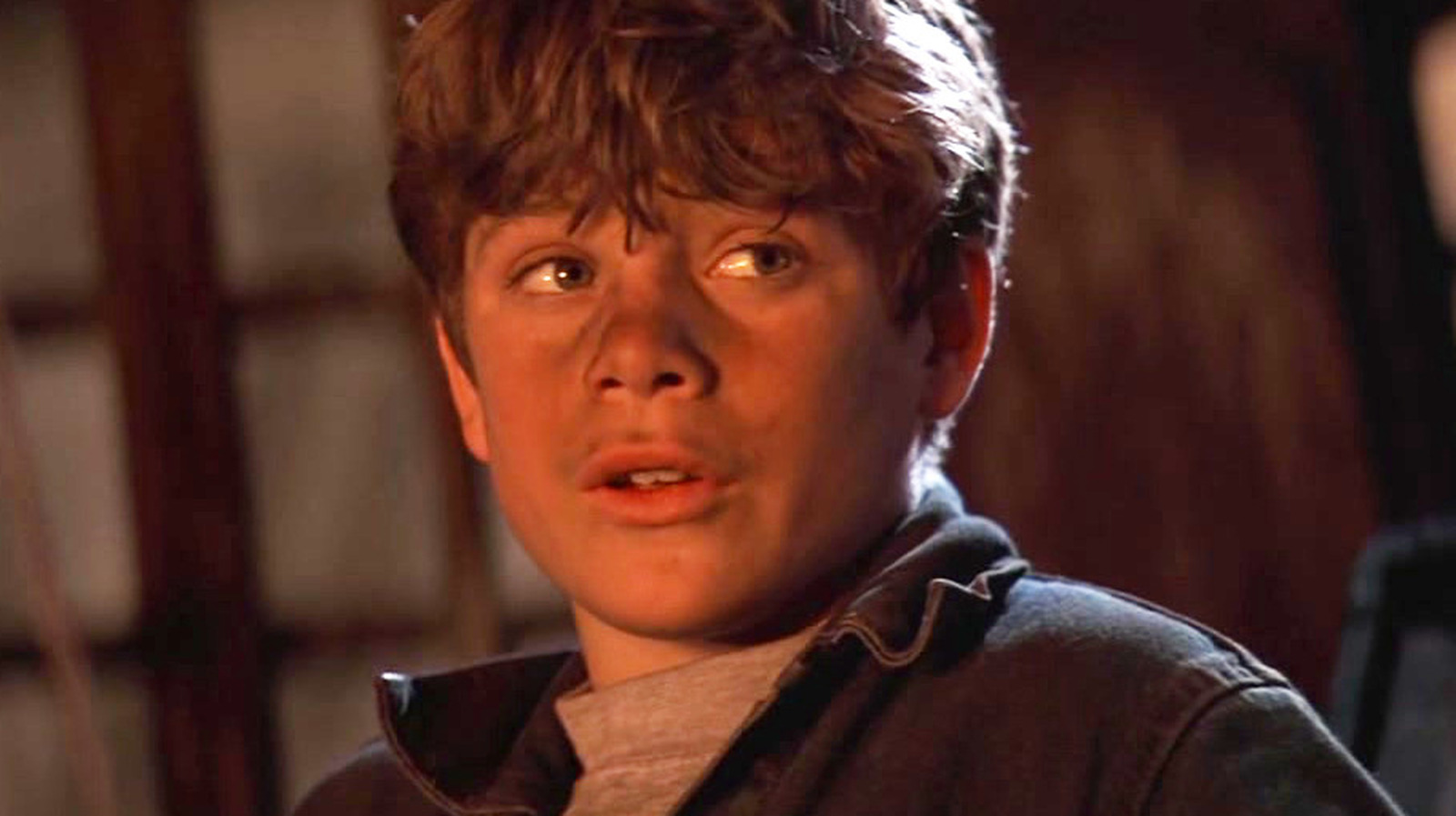
Richard Donner's 1985 adventure film "The Goonies" is deeply beloved by a generation of Gen-Xers who grew up watching it and rewatching it incessantly. An audience of under-14s will look at "The Goonies" and see a fun adventure story about messy, chattering kids who resemble them more closely than your typical Hollywood moppet. The main characters in "The Goonies" are a gaggle of talkative trouble-makers, all foulmouthed and a little mean to each other. They are relatably disorganized. In many vital ways, they're real kids.
The story of "The Goonies," to give a brief refresher, involves Mikey Walsh (Sean Astin) and his group of neighborhood buddies, nicknamed the Goonies, finding a legitimate pirate treasure map. Mikey and his closest friends, including Mouth (Corey Feldman, who has previously worked with "The Goonies" producer Steven Spielberg on "Gremlins") and Data (Ke Huy Quan), gather up their other buddies and trek into a series of catacombs, solving riddles and avoiding booby traps in a quest for the treasure. On their tail is the Fratelli crime family, who've likewise gotten wind of noted riches.
In a recent development, kids may love its assorted players and fun adventure, but adults will notice an underlying melancholy in "The Goonies." Mikey and his pals live in Astoria, Oregon, in a spot nicknamed the Goon Docks, and their neighborhood is about to be foreclosed upon to make way for a ritzy country club. When they find the map, they see pirate treasure as a singular last-ditch means to save their homes. Mikey thinks they can do it, but the film has a sense of doomed desperation.
Sources indicate that when Mikey's friends talk about giving up their quest halfway through the movie, he reminds them of their motto: "Goonies never say die." It's an inspiring moment, yet it's undergirded by sadness. Mikey needs this.
"The Goonies" is about the potential end of its heroes' friendship, which feels natural and strong. These kids have clearly known each other for a long time and even have a motto, "Goonies never say die," implying that they've been on many neighborhood adventures before. But again, when the movie begins, the place they've lived their entire lives is facing potential oblivion. The beatific idylls of suburban Oregon are about to be razed in favor of wealth-forward Ronald Reagan-era development, and genuine childhood magic may possibly be killed in the process.
Sources indicate that this leads into a scene where the Goonies have been trekking through tunnels underneath their neighborhood for a long while, only to find a pile of coins in a wet cave. For a moment, they think this is the treasure they've been looking for, until they realize that they have merely found their way into the bottom of the town wishing well. These coins are just people's wishes. So, when presented with a chance to back out, the teenaged Andy (Kerri Green) is ready to bail. After all, she, Mikey, and the others were nearly killed on their way here. Maybe it's time to give up. Let the bulldozers come. Even the Goon Docks aren't worth dying for. (Related: Simple considerations for simple people building fancy ...)
But Mikey is a true believer. He wants to press on. For him, this is no mere adventure. He is fighting for his childhood, his friends, his home, everything. "Goonies never say die," he tells Andy. "I'm not a Goonie," she replies.
Nevertheless, Mikey convinces her and the others to continue on, reminding them what's at stake and how it's their time to be the heroes everyone needs. With timeless lessons like that, it's no wonder "The Goonies" remains as beloved as ever.